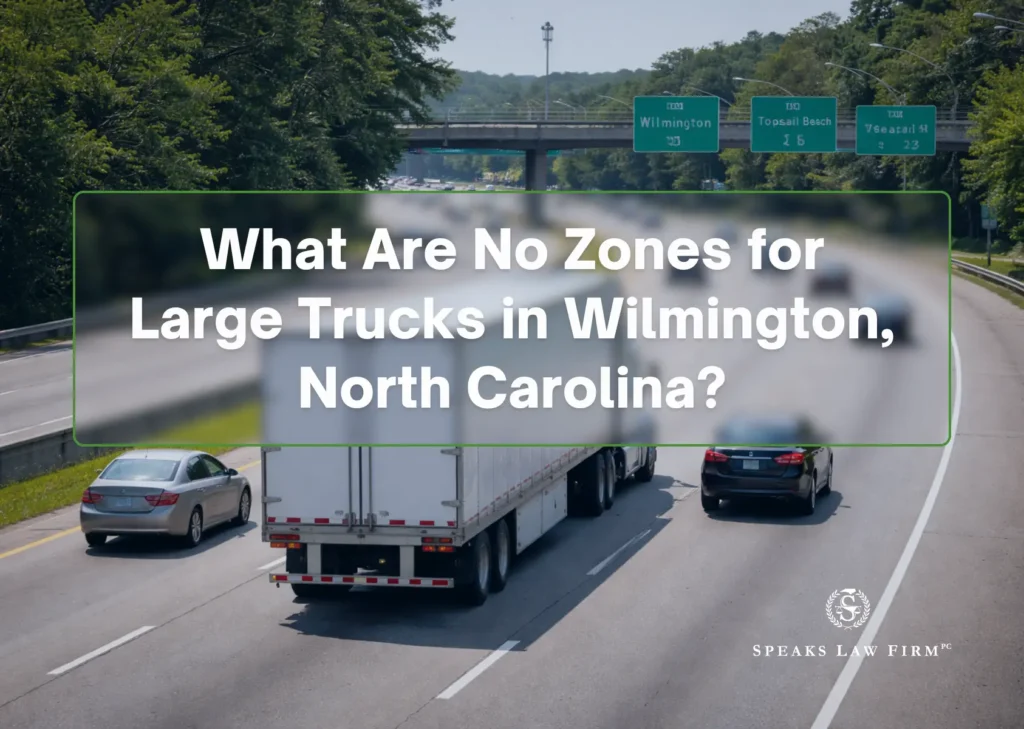
If you’ve ever been on the freeway beside a commercial truck or sandwiched between two of them, you become very aware of their size. Most drivers focus on staying in their lane and keeping a safe distance, but what you may not be aware of is something called no zones. These are the blind regions around large trucks where the driver has limited visibility, and they influence many of the truck accident cases that happen in Wilmington.
Heavy commercial traffic moves through I-40, MLK Parkway, Market Street, and the port routes throughout the day. A smaller vehicle can slip into a blind region without realizing it, and when a large truck changes lanes, turns wide, or slows in heavy traffic, those no zones can play a major role in how a collision unfolds.
What are no zones for large trucks, and why do they matter so much here in Wilmington? This question comes up often after a collision because these blind regions help explain why certain crashes happen and how fault may be evaluated during an accident investigation. Understanding how no zones affect visibility gives you a clearer picture of the conditions surrounding a truck accident in North Carolina and the factors attorneys review when determining whether driver negligence contributed to the event.
At a Glance
- Large-truck no zones are blind areas on all four sides of a tractor trailer where visibility drops sharply.
- Wilmington roads with heavy commercial traffic make these zones a recurring factor in local truck accident cases.
- The right-side no zone carries the highest risk due to its length and limited visibility for truck drivers.
- Collisions linked to no zones often involve lane changes, wide turns, sudden braking, or merging traffic.
- Injuries in these crashes may involve traumatic brain injuries, spinal cord injuries, internal injuries, and long-term treatment needs.
- Liability can extend to truck drivers, trucking companies, cargo loaders, maintenance providers, and other vehicles in the area.
- Attorneys build truck accident claims by reviewing the accident scene, black-box data, maintenance records, and compliance with federal and state regulations.
- Victims may pursue compensation for medical bills, future medical expenses, lost wages, property damage, and other losses.
What are No Zones?
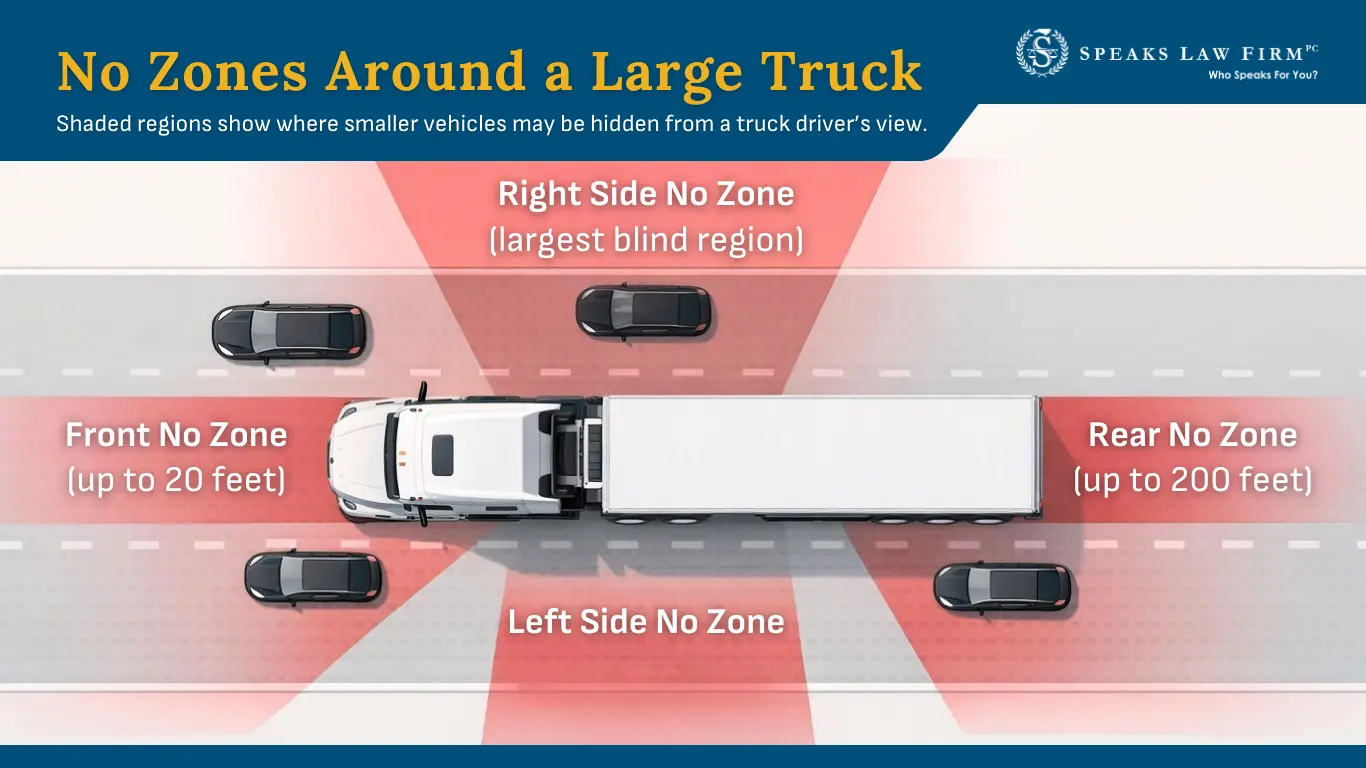
No zones are the blind regions around large trucks where the driver loses sight of smaller vehicles. Although many people assume a higher cab gives truck drivers a better view of the road, a car can disappear completely along the sides, in front of the cab, or behind the trailer. These blind regions are large enough to hide a passenger vehicle and can influence how a Wilmington truck accident occurs, particularly on routes with steady commercial traffic.
According to North Carolina safety guidance, the blind region may extend up to 20 feet in front of the truck’s cab, along both sides of the trailer, and as far as 200 feet behind it. Truck drivers rely on mirrors, training, and federal and state regulations to manage visibility, but collisions can still occur when a smaller vehicle moves into a spot the driver cannot see. A lane change, wide turn, or slow-moving traffic can create conditions where a hidden car is placed in significant danger.
The primary no zones include:
- Front blind region
- Left-side blind region
- Right-side blind region
- Rear blind region
These areas become central to truck accident investigations, particularly when attorneys review evidence from the accident scene, driver behavior, and maintenance records.

Left-Side No Zones: A Frequent Factor in Lane-Change Collisions
The left side of a large truck offers better visibility than the right, but a blind region still exists. The NC Highway Patrol notes that a vehicle can disappear from view along the side of a truck’s cab, even when the mirrors are properly adjusted. Wilmington drivers encounter this problem on I-40, Market Street, and other busy roads where lane changes happen quickly. When a truck driver begins merging without noticing the car running beside the cab, a collision can occur with little warning.
This often causes:
- Sideswipe impacts
- Forced merge situations
- Cars being pushed toward barriers or other vehicles
Left-side blind regions influence many Wilmington truck accidents because they affect what the truck driver can see during a lane change. When a smaller vehicle stays beside the cab for longer than expected, the driver may not realize the lane is already occupied. This limited visibility, combined with heavy traffic and fast-paced merging, often shapes how the impact occurs and why the collision leaves so little room for the smaller vehicle to avoid harm.
Right-Side No Zones: Wilmington’s Highest-Risk Blind Area
The largest and most dangerous blind region sits along the right side of a large truck. This area extends farther back than the left side and makes it difficult for the driver to see smaller vehicles that travel beside the trailer. Wilmington’s port traffic adds to this challenge, particularly as commercial drivers move between River Road, Burnett Boulevard, and Front Street with full or empty loads throughout the day.
Heavy traffic patterns often keep passenger vehicles in the right-side no zone longer than they realize. When a large truck begins a wide turn, merges across multiple lanes, or slows in tight traffic, the driver may not see the vehicle running along the right side of the trailer.
Common contributing factors include:
- Wide right turns near downtown and port entrances
- Sudden braking when traffic compresses
- Fatigued driving during long shipping routes
- Multi-lane merges near Market Street and College Road
Right-side blind regions play a major role in Wilmington truck accident cases because they affect how the collision develops and how visibility changes during lane shifts or turns. Understanding how this blind region works gives context to the conditions that often lead to severe injuries and extensive property damage.
Front No Zones: Limited Visibility Directly Ahead of a Large Truck
The front no zone is the blind region directly ahead of a large truck where the driver cannot see smaller vehicles. This blind region may extend up to 20 feet in front of the cab, which means a car that pulls in too closely can disappear from the driver’s view. Wilmington roads such as Military Cutoff Road and MLK Parkway often have stop-and-go traffic, and the constant movement increases the likelihood of a vehicle entering this hidden space.
Front no-zone crashes often involve:
- Cars moving into the lane too closely
- Large trucks braking to avoid road hazards
- Drivers misjudging merge timing
- Congested traffic that reduces spacing
Because the front blind region limits reaction time, these collisions can lead to severe injuries, internal injuries, and significant property damage. The combination of limited visibility and heavy traffic contributes to the conditions that make front no-zone crashes so dangerous on Wilmington roadways.
Rear No Zones: The Risks Behind a Large Truck
The rear no zone is the blind area that extends behind a large truck, which may extend up to 200 feet depending on the truck and roadway conditions. A smaller vehicle can disappear from the driver’s view completely, particularly when following too closely. On Wilmington roads such as I-40 or College Road, sudden slowdowns can limit reaction time for both vehicles and increase the chance of a rear-end collision.
Common rear no-zone risks include:
- Limited visibility due to trailer height
- Brake lights that are harder to see in heavy traffic
- Rolling-back situations on inclines
- Reduced stopping distance during congestion
Rear no-zone crashes can lead to serious injuries, internal injuries, and significant property damage because the smaller vehicle absorbs most of the impact. The combination of limited visibility and heavy traffic often shapes how these collisions occur on Wilmington roadways.
Note: No-zone distances are approximate and vary based on truck configuration, trailer length, and roadway conditions.
Typical No Zone Crash Patterns in North Carolina
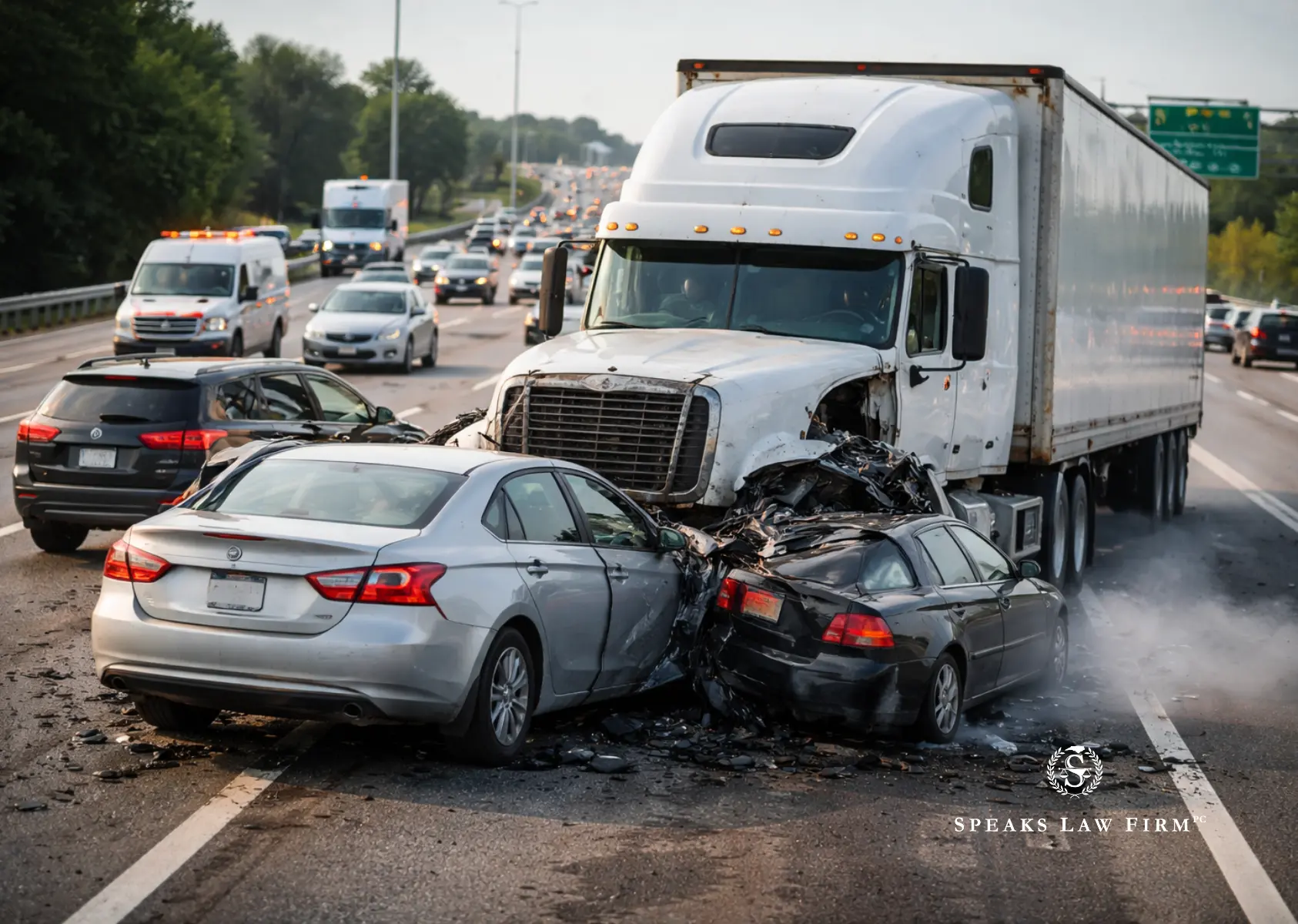
Wilmington’s traffic patterns, bridges, industrial routes, and port corridors contribute to recurring crash scenarios involving large trucks. No zones often shape how these collisions develop because they limit what the truck driver can see in fast-moving or congested areas.
Common patterns include:
- Side impacts when a large truck changes lanes and cannot see the vehicle beside it
- Underride collisions when a car enters the front no zone in stop-and-go traffic
- Right-side turn impacts near port routes where trucks need extra space to turn
- Rear-end collisions when a smaller vehicle follows too closely behind a tall trailer
- Multi-vehicle crashes when a large truck moves across several lanes in heavy traffic
These scenarios often lead to severe injuries, internal injuries, and significant property damage because of the size difference between passenger vehicles and large trucks. Understanding these patterns helps explain why no zones remain a persistent safety concern on North Carolina roads.

How Fault and Liability Are Evaluated in Wilmington No Zone Truck Accidents
No zones influence how investigators review fault because these blind regions determine what the truck driver could or could not see before the impact. When a Wilmington truck accident occurs during a lane change, wide turn, merge, or sudden slowdown, investigators look at the position of the smaller vehicle and how visibility may have shaped the sequence of events. The review often focuses on how the large truck moved, how long a passenger vehicle stayed in a blind region, and whether the driver followed required safety procedures.
Evaluating fault involves a detailed look at the conditions surrounding the collision. Evidence commonly includes black-box data showing speed or braking, maintenance records documenting inspections, cargo-loading practices, and compliance with federal and state regulations.
Photos, videos, and measurements from the accident scene help clarify how the vehicles moved and where visibility may have dropped. Actions by other drivers, road-surface conditions, and traffic pressure near Wilmington’s port routes and major corridors may also be part of the review.
Several parties may share responsibility in a no-zone collision, depending on what the evidence shows. Potentially liable parties include:
- Truck drivers
- Trucking companies
- Cargo loaders
- Maintenance providers
- Vehicle-part manufacturers
- Other drivers who influenced traffic flow
- Roadway contractors responsible for road conditions
When several contributing factors appear, fault is evaluated by looking at how visibility limitations interacted with driver conduct and the surrounding environment.
Injuries Commonly Linked to No-Zone Truck Accidents
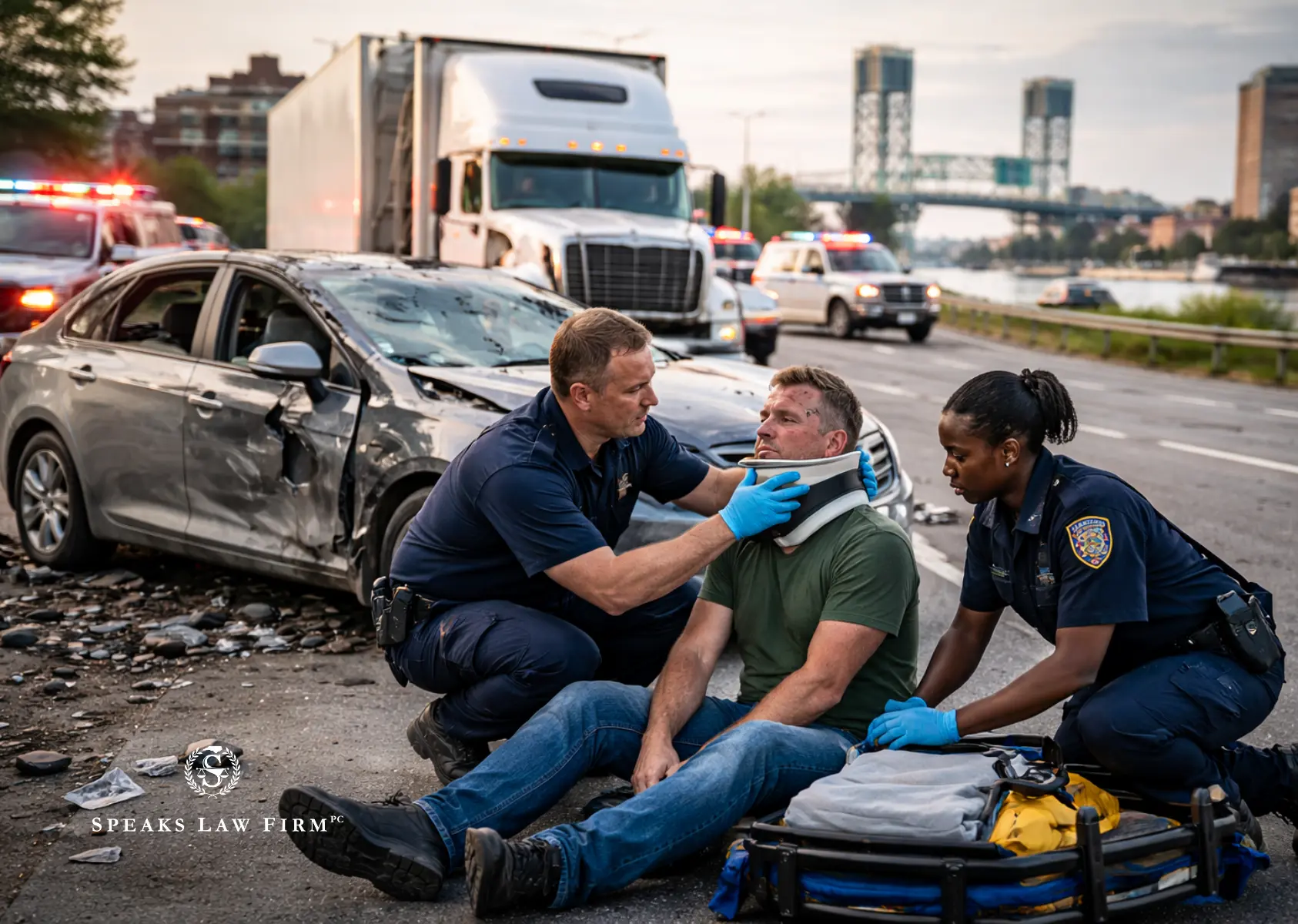
Collisions involving a large truck can cause serious injuries because of the force created by the size and weight difference between the vehicles. When a smaller car enters a no zone during heavy traffic or a lane change, the impact often concentrates on the passenger vehicle, leaving occupants with significant injuries that require medical attention and ongoing treatment.
Common injuries include:
- Traumatic brain injuries
- Spinal cord injuries
- Internal injuries to organs
- Broken bones
- Neck and back trauma requiring physical therapy
- Permanent disability
- Emotional distress and mental anguish
These injuries can disrupt daily routines, limit mobility, and create long-term treatment needs. When an injury affects your ability to work, lost wages and lost income often become part of the financial strain associated with a Wilmington truck accident.
When to Contact an Attorney After a No Zone Collision
People often reach out to a North Carolina truck accident lawyer when they have questions about how a no zone affected their crash or when post-accident complications begin to develop. Certain situations make early legal guidance more valuable, particularly when liability may involve several parties.
Common reasons include:
- The accident occurred in a known no zone
- Injuries appear hours or days later
- The insurance company refuses to accept fault
- Multiple parties may be held liable
- Accident reconstruction specialists are needed
- Medical bills continue to rise
- Lost income becomes a concern
A Wilmington legal team can review the available records, identify responsible parties, and manage the insurance claim process so the injured person can move forward with more information about their options.

How Attorneys Build Strong Truck Accident Claims in Wilmington
Building a strong truck accident claim requires a close review of the conditions surrounding the collision. North Carolina truck accident lawyers look at how the large truck moved before the impact, the visibility limitations created by the no zones, and the events captured at the accident scene. Collaboration with accident reconstruction specialists and medical professionals often helps clarify how the crash unfolded and the extent of the injuries involved.
Key forms of evidence include:
- Photos and videos from the accident scene
- Black-box data showing speed, braking, or steering
- Maintenance records documenting inspections
- Compliance files from trucking companies
- Medical records from initial and follow-up treatment
- Analysis from qualified professionals who evaluated the evidence
- Property damage reports
- Communications from the insurance company
If the insurance company refuses to accept fault, this evidence shapes the strategy for negotiations or litigation. In some situations, a truck accident lawsuit becomes necessary to pursue compensation for long-term costs.
Compensation Available in North Carolina Truck Accident Cases
When personal injury cases involve a large truck, the injuries and financial losses can be significant. Medical treatment, time away from work, and long-term care needs often create substantial expenses, many of which become part of the compensation calculation in a truck accident in North Carolina.
North Carolina follows a fault-based system for personal injury cases. That means compensation depends on establishing who was responsible for the collision. Under the state’s pure contributory negligence rule, a person may be barred from recovering compensation if they are found to have contributed in any way to the accident.
A simple example shows how this works. If an investigation finds that you were even one percent at fault for positioning your vehicle slightly over the lane line while the large truck began merging, an insurance company may argue that this contributed to the collision. Because North Carolina applies contributory negligence, a finding of even one percent fault can affect the ability to recover compensation.
When a Wilmington truck accident claim moves forward, compensation may include the following categories:
- Medical bills
- Future medical expenses
- Lost wages
- Lost income
- Physical pain
- Emotional distress
- Mental anguish
- Property damage
- Potential punitive damages
- Long-term care needs
This structure helps explain why legal analysis focuses on visibility limitations, driver behavior, and the conditions surrounding the crash.
No Zone Truck Accidents in Wilmington
Wilmington drivers often turn to Speaks Law Firm for guidance after truck accidents involving no zones and visibility limitations on local roads. The firm regularly reviews collisions that occur on I-40, Market Street, MLK Parkway, and routes near the Port of Wilmington.
Were You Injured in a Large Truck Accident?
A collision with a large truck can leave you facing medical treatment, lost income, and questions about who may be responsible. These cases often involve federal motor carrier regulations, company safety practices, and detailed accident-scene evidence. Speaks Law Firm handles Wilmington truck accident claims with a level of focus that reflects what is at stake for you and your family. When you speak with a North Carolina truck accident lawyer from our team, you receive guidance grounded in years of working with injured people across the state.
Truck cases are different from typical auto collisions. They often require black-box downloads, driver log reviews, trucking-company compliance files, and coordination with reconstruction specialists. Our firm regularly manages these steps for people who are trying to recover and move forward. Many individuals searching for a personal injury law firm contact us because they want a team that understands how trucking cases develop and how to evaluate the path forward under North Carolina law.
If you would like to discuss a recent truck accident, call (910) 341-7570(910) 341-7570 to schedule your FREE case review. You may also submit our confidential online form.
While you wait for your FREE consultation, we invite you to check out our podcast, Personal Injury Lawyer Podcast with American Injury Lawyer Clarke Speaks.
Who Speaks for You? We Do!
Copyright © 2026. Speaks Law Firm. All Rights Reserved.
The information in this blog post (“post”) is provided for general informational purposes only and may not reflect the current law in your jurisdiction. No information in this post should be construed as legal advice from the individual author or the law firm, nor is it intended to be a substitute for legal counsel on any subject matter. No reader of this post should act or refrain from acting based on any information included in or accessible through this post without seeking the appropriate legal or other professional advice on the particular facts and circumstances at issue from a lawyer licensed in the recipient’s state, country, or other appropriate licensing jurisdiction.
Speaks Law Firm902 Market St. Wilmington, NC 28401(910) 341-7570https://www.speakslaw.com/