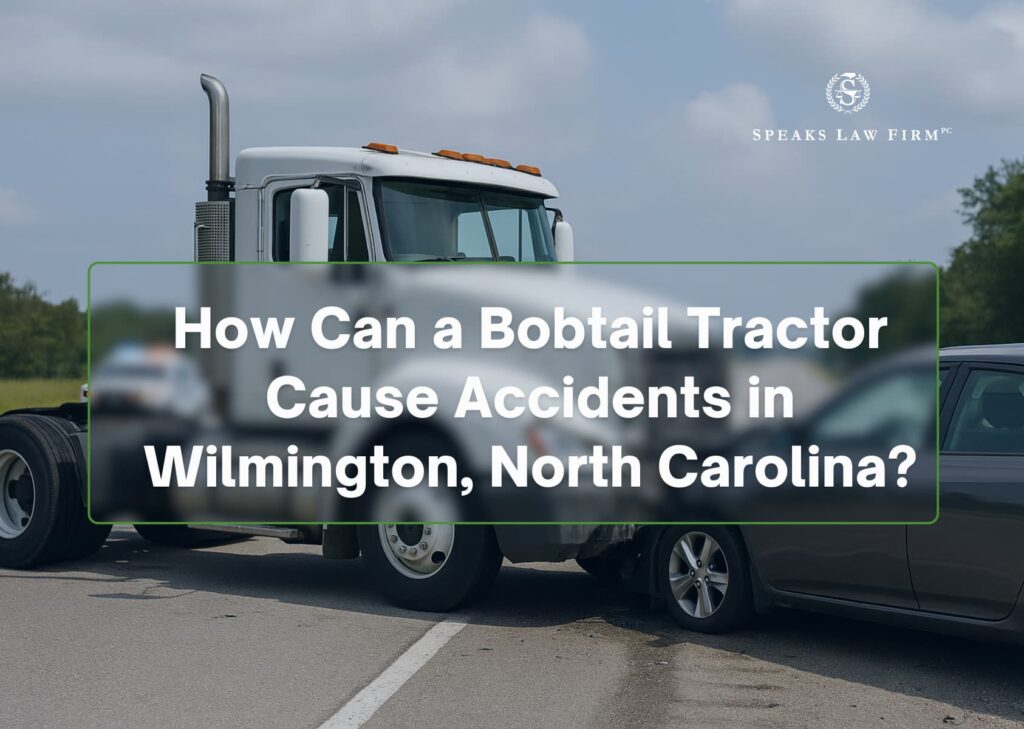
You may not have thought much about bobtail tractors until the day one crashed into your vehicle. Most drivers don’t realize that a tractor operating without a trailer handles very differently from a fully-loaded truck. What looks like a lighter, safer vehicle is actually harder to control, and the people who share the road with these trucks often pay the price when something goes wrong.
If you were involved in a crash with a bobtail tractor in Wilmington, North Carolina, you might still be trying to piece together how it happened. Maybe the truck swerved unexpectedly, braked too hard, or slid into your lane before you had time to react. Now you’re dealing with pain, medical bills, time away from work, and an insurance company that wants you to settle the case before you have even had time to understand the full extent of your injuries.
Many people start searching online at this point because they want to understand what went wrong, who may be responsible, and how state law treats a truck accident in North Carolina involving a tractor without a trailer. When the circumstances feel overwhelming, it can help to have clear information about what caused the crash and what steps may support your recovery.
This blog explains why bobtail tractors are difficult to control, how they cause accidents in Wilmington, and what evidence can strengthen your personal injury claim under North Carolina law. You’ll also find FAQs that address common concerns for people recovering from these crashes.
Why Bobtail Tractors Are Harder to Control Than Fully-Loaded Trucks
If your accident involved a tractor without a trailer, you may still be asking how the crash even happened. To most drivers, a bobtail tractor looks easier to control because it weighs less. In reality, a truck in this configuration is far more unpredictable, and many people only learn this after they’ve already been injured.
Did You Know? The term “bobtail” originally referred to animals with shortened or clipped tails. Truckers adopted the word because a tractor operating without a trailer appears “tail-less,” and the industry has used the term ever since.
A bobtail tractor behaves differently because it’s built to carry a heavy trailer. Once that trailer is removed, the balance of the vehicle changes in a way that affects steering, braking, and stability on the road.
Key reasons bobtail tractors create unexpected dangers are due to:
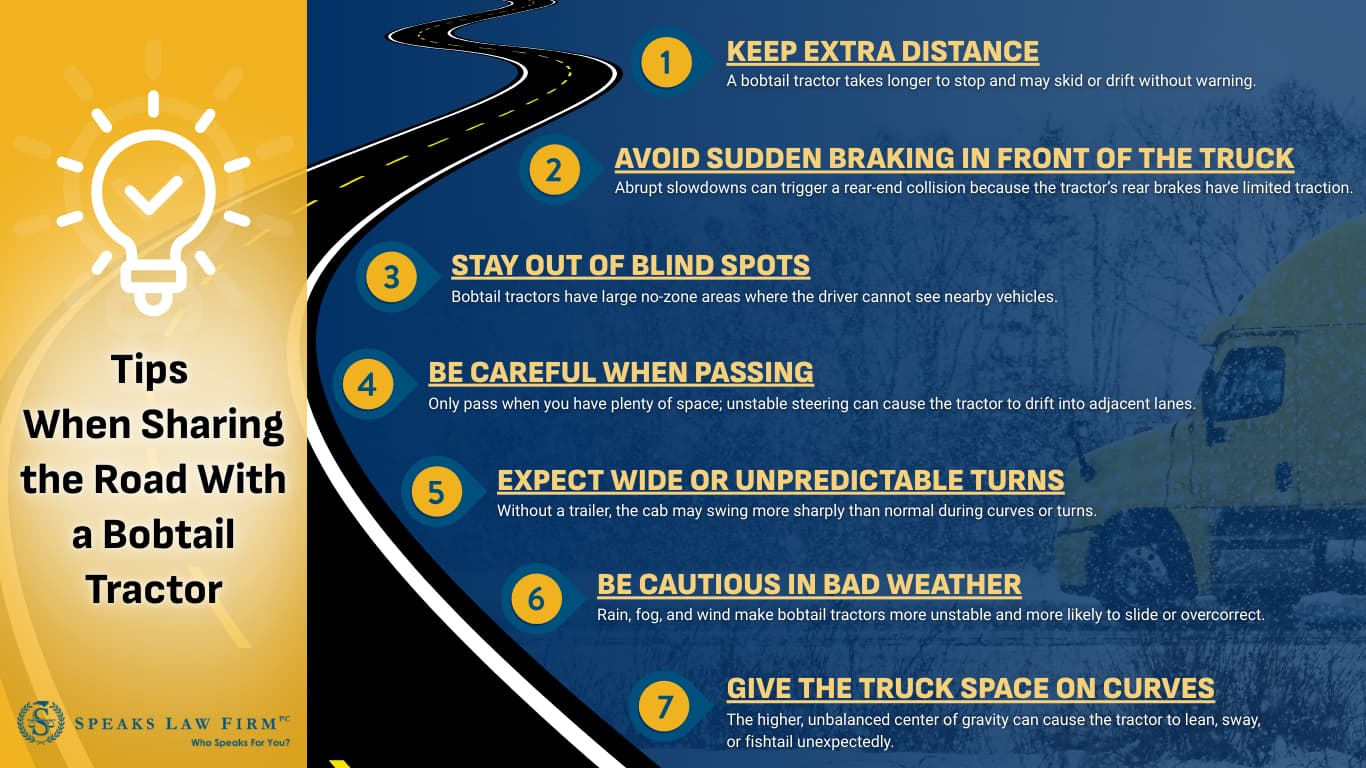
- Uneven weight distribution. Nearly all the truck’s weight shifts to the front axle. The rear axle becomes light, which makes the tractor less stable and more likely to slide or bounce on uneven pavement.
- Reduced rear braking power. Because the rear tires don’t have enough weight pressing down on them, they cannot grip the road the way they are designed to. The truck depends heavily on its front brakes, which increases the chance of skidding during sudden stops.
- Unpredictable handling. Without the trailer’s stabilizing pull, a bobtail tractor can respond too sharply to steering input. A minor correction can turn into a wider swing, drift, or fishtail that nearby vehicles cannot anticipate.
- Longer stopping distances. Many people assume a lighter vehicle can stop faster, but bobtail tractors do the opposite. Their braking systems are designed for heavy loads, so when the trailer is gone, stopping becomes more difficult, not less.
- Higher center of gravity. With no trailer weighing it down, a bobtail tractor can lean or sway more on curves, particularly at higher speeds or in coastal winds along routes like US 17, College Road, or I-40.
These handling problems explain why your crash may have felt sudden or unavoidable. A bobtail tractor can become unstable without warning, and nearby drivers often have no time to react when the truck loses control on Wilmington’s major roads or highway areas.

How a Bobtail Tractor Can Lose Control and Cause a Serious Crash
If you were hit by a bobtail tractor, you might still be replaying the moments before the collision and wondering what went wrong. Many people who call Wilmington truck accident lawyers describe the same thing: the crash felt sudden, unpredictable, and impossible to avoid. There’s a reason for that. Since a tractor without a trailer is harder to control, even small mistakes by the truck driver can lead to major impacts for nearby vehicles.
Below are the situations that most often lead to bobtail tractor accidents in Wilmington.
The Truck Cannot Brake Correctly When Bobtailing
Rear brakes depend on weight pressing down on them. When a tractor is not pulling a trailer, the rear axle becomes extremely light. This makes braking one of the most dangerous parts of operating a bobtail tractor.
How this contributes to crashes:
- Skidding during hard braking. In a sudden stop, the front brakes can lock while the rear skids or slides. The tractor may drift sideways or slam into the vehicle ahead before the driver can correct it.
- Overshooting traffic slowdowns. Traffic changes quickly on Market Street, College Road, or I-40. A bobtail tractor often cannot stop in time, which can create multi-vehicle collisions.
- Hydroplaning on wet roads. Wilmington sees frequent rain. When the rear tires cannot grip the road, a bobtail tractor is more likely to hydroplane, fishtail, or swing into another lane.
- Rear axle lift. In an emergency stop, the rear axle can lift slightly off the pavement. When that happens, the driver loses nearly all braking control.
If evidence shows the driver failed to slow for conditions or followed too closely, the trucking company may bear responsibility depending on the evidence. Skid marks, vehicle positions, and electronic brake data often help show what happened.
Steering Becomes Unstable and Leads to Sudden Lane Drifts
A bobtail tractor reacts differently to steering input because most of its weight sits over the front axle. This imbalance makes the tractor more sensitive than drivers expect, and even a minor movement of the wheel can create sudden shifts across the roadway.
When the tractor enters a curve, the lack of trailer weight allows the cab to lean more than usual, which can cause the truck to drift or overcorrect. The same problem arises during lane changes or when the driver tries to merge into moving traffic. A quick adjustment meant to avoid slowed vehicles can send the tractor wider than intended, sometimes crossing lane markings or sideswiping nearby cars.
Wind also plays a role. Gusts push against the cab and require the driver to react quickly. With a bobtail tractor’s lighter rear end, those corrections can create unpredictable movement, making it harder to maintain a straight path.
Evidence that helps show this type of instability may include dashcam footage, tire scuff patterns, traffic camera recordings, witness descriptions, and electronic steering data. These details help explain the tractor’s behavior in the moments leading up to the collision.
Delayed Reaction Time Makes an Unstable Truck Even More Dangerous
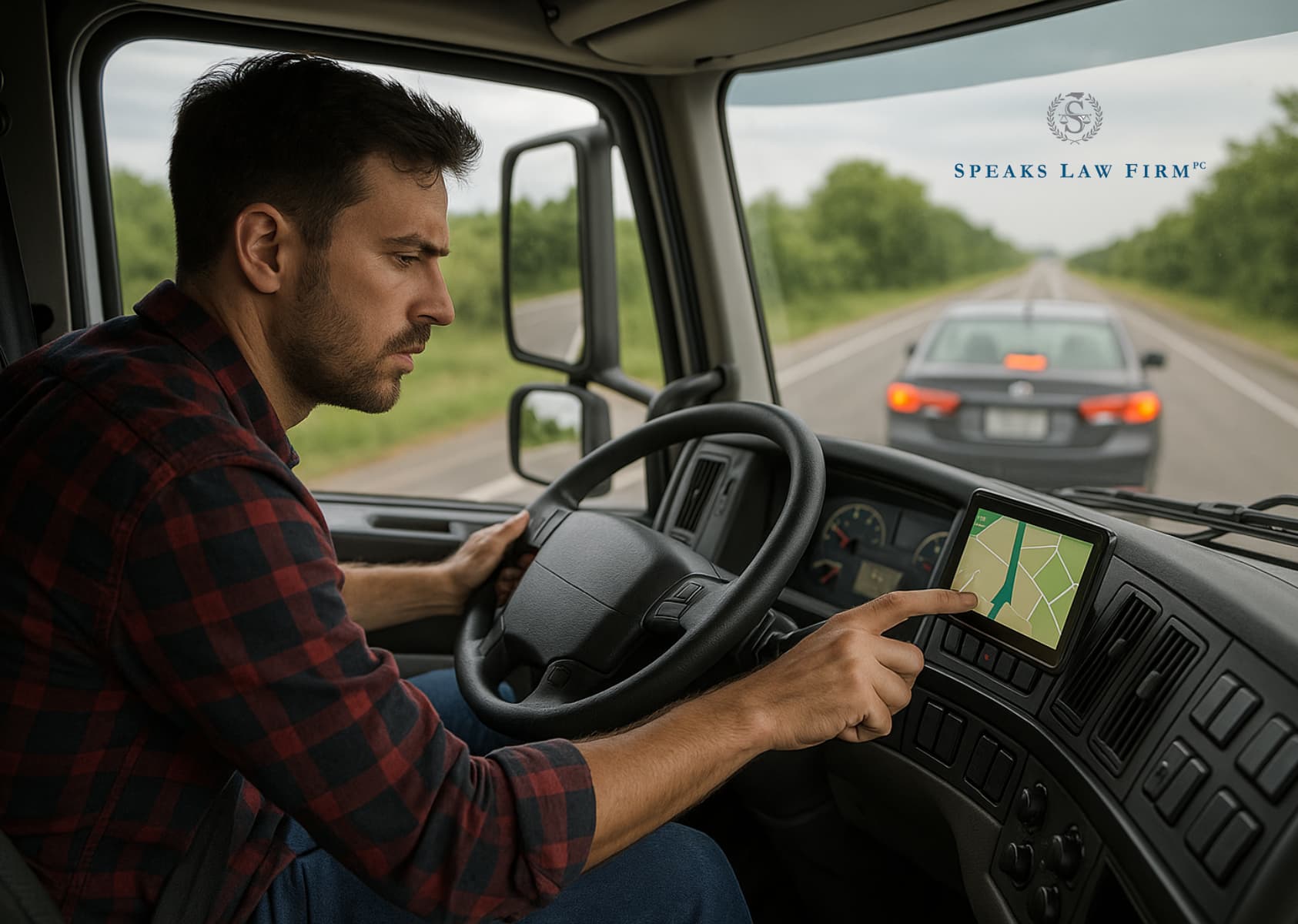
Bobtail tractors require more attention and stronger control than fully-loaded trucks. When a driver is tired, distracted, or poorly trained, reaction time slows, which increases the chances of a crash.
Common scenarios include:
- Driver fatigue. Even with federal hours of service rules, some drivers push themselves during bobtail trips. Fatigue affects judgment and slows reflexes.
- Distraction inside the cab. Adjusting a GPS, texting, eating, or handling paperwork can delay a driver’s response long enough to miss a hazard.
- Poor training on bobtail handling. Not all trucking companies teach drivers how differently a tractor handles without a trailer. A driver who is confident with a full trailer may not understand the risks of bobtailing.
- Sudden congestion on local roads. Congested intersections or rapidly slowing traffic can force sudden steering decisions the tractor cannot handle safely. A driver who reacts too late can trigger a chain reaction crash.
When the truck driver violates safety regulations, ignores signs of fatigue, or operates outside their training, the trucking company may share responsibility for the collision.
Speeding or Following Too Closely Makes a Bobtail Tractor Nearly Impossible to Control
Some truck drivers hurry between loads or try to get back to their yard quickly. When a bobtail tractor speeds, the handling issues multiply.
Why speeding is so dangerous for a bobtail tractor:
- The tractor can fishtail on rough or uneven pavement
- Oversteering becomes worse at higher speeds
- The stopping distance increases dramatically
- The driver may have no time to brake for slowed traffic
Following too closely also poses a serious risk. Without trailer weight to stabilize the cab, a bobtail tractor can strike the rear of a passenger vehicle with significant force.
Wilmington crash victims often describe feeling like the truck “came out of nowhere,” and this is one of the main reasons.

Weather Conditions Make Handling Problems Even Worse
Wilmington’s coastal climate puts a bobtail tractor at an added disadvantage because weather conditions amplify the tractor’s weaknesses.
Common weather-related risks include:
- Rain. Rain lifts oil from the asphalt and creates slick surfaces. The lighter rear axle of a bobtail tractor loses traction quickly.
- Fog. Low visibility near the river or rural roads can hide brake lights, curves, or merging vehicles. A bobtail tractor can easily overcorrect when the driver reacts late.
- Wind. Strong winds near the Cape Fear River or open highway areas push against the tractor’s cab and cause sudden lane movements.
- Temperature changes. Cold mornings can leave thin, nearly invisible ice on bridges and overpasses. Rear tires on a bobtail tractor can slip without warning.
Insurance companies often blame the weather to avoid paying compensation. But under North Carolina law, a truck driver must adjust their speed and behavior to conditions. Failure to do so can be negligence.
Mechanical Problems Turn a Bobtail Tractor Into a High-Risk Vehicle
Even without a trailer, a bobtail tractor is still a full commercial vehicle that requires routine inspections. Skipped maintenance can create dangerous failures.
Mechanical issues that frequently lead to crashes include:
- Worn or unbalanced brakes
- Bald or improperly inflated tires
- Steering defects that cause drift
- Suspension issues that create bouncing or instability
- Faulty brake modulators that affect stopping ability
Maintenance logs, inspection reports, and repair documentation often reveal whether the problem was preventable.
Who Could Be Responsible for the Bobtail Tractor Accident?
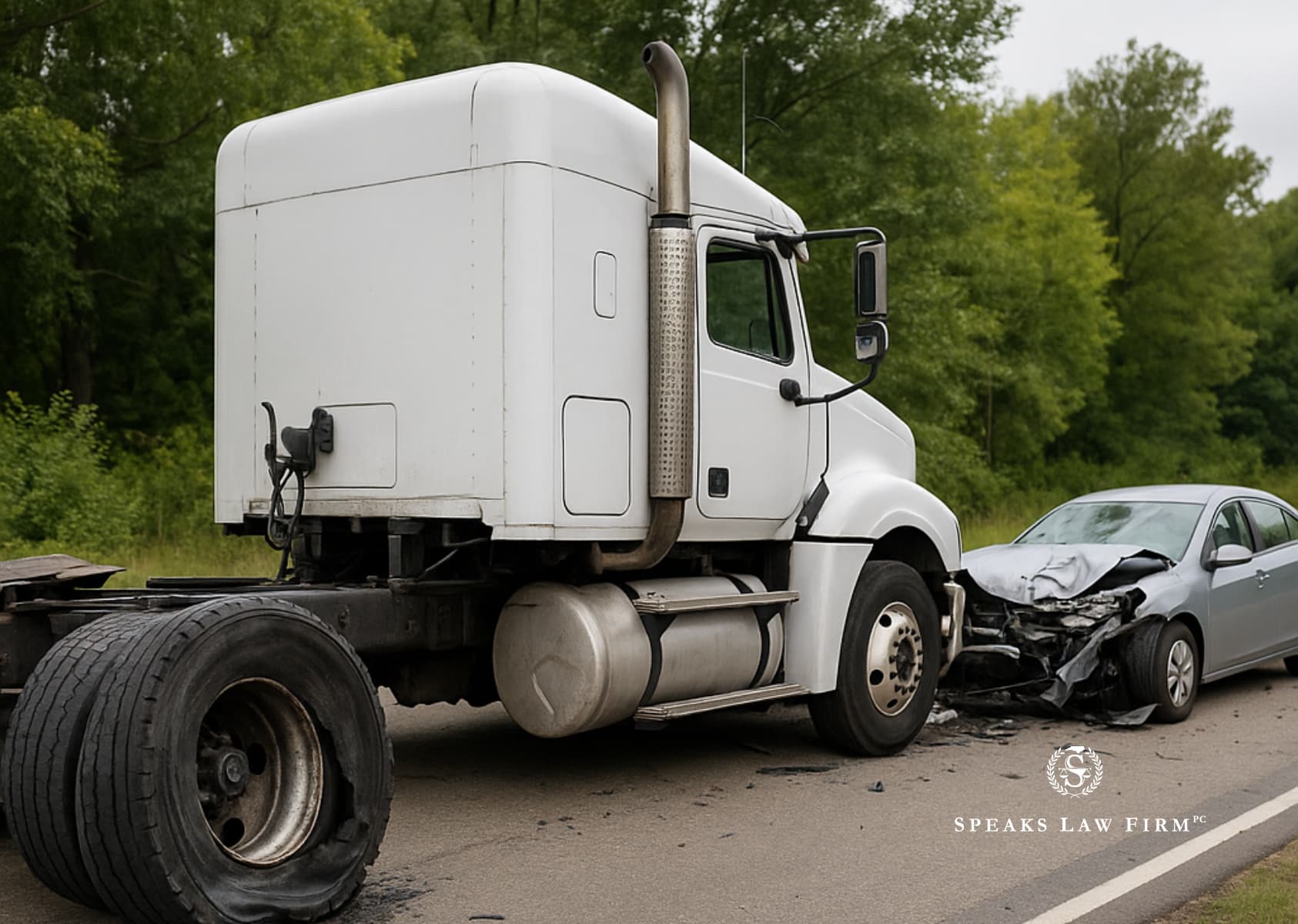
After a crash with a bobtail tractor, you may feel unsure about who should be held responsible. These cases are rarely simple because several parties can play a role in how the tractor was operated, maintained, or supervised. Understanding who may be liable helps you see where your claim stands and what evidence could support it.
Below are the groups that often become involved in Wilmington bobtail tractor accident cases.
The truck driver
A driver may be responsible if the evidence shows speeding, distraction, fatigue, following too closely, improper braking, or poor control of the tractor without its trailer. Because a bobtail tractor is harder to handle, even brief inattention can contribute to a serious crash.
The trucking company
A company may be liable if it failed to provide proper bobtail-handling training, ignored known safety issues, skipped or rushed maintenance, pressured drivers with unrealistic timelines, or allowed drivers to operate while fatigued. Company policies and supervision often contribute to the conditions that lead to a crash.
A loading facility or shipper
If the tractor was recently hauling cargo and something about the prior load affected the tractor’s mechanical condition, a loading facility or shipper may be involved. This is less common with bobtail crashes, but it is still possible when mechanical stress or damage occurred during unloading.
A repair shop or maintenance contractor
A repair shop may be responsible if work was incomplete, rushed, or done incorrectly. Faulty repairs involving brakes, steering systems, or suspension components can make a bobtail tractor unstable.
Another driver on the road
Sometimes another vehicle triggers the chain of events. Sudden lane changes, cutting off the truck, or unsafe merging can cause the bobtail tractor to react sharply and collide with your vehicle.
A manufacturer
If a mechanical defect caused the tractor to lose control, responsibility may fall on the manufacturer of the tractor or a specific component such as the brakes, steering system, tires, or other parts that failed during normal use. These cases often require a close review of the tractor’s equipment, repair history, and performance data.
How Contributory Negligence Affects Your Bobtail Tractor Accident Claim
North Carolina’s contributory negligence rule plays a major role in how truck accident claims move forward. Under this rule, if the insurance company can show you were even one percent responsible for the crash, they may attempt to block compensation entirely.
This is one of the strictest negligence standards in the country. The defendant (the person or company accused of causing the crash) has the burden of proving contributory negligence under N.C. Gen. Stat. § 1-139.
For example, if the insurance company claims you stopped too abruptly or moved within your lane at the wrong moment, they may argue you contributed to the crash, which could block compensation even if the truck’s instability played the primary role. These tactics are common because the bar for denying compensation is so low.
This is why gathering evidence early is so important. Black box data, maintenance records, witness statements, accident reconstruction findings, and video footage help show how the crash occurred and make it more difficult for the insurance company to argue that you share any portion of the blame.
What You Can Do After a Bobtail Tractor Crash in Wilmington
If you were already involved in a crash with a bobtail tractor, you may be trying to manage pain, car damage, and confusing insurance questions at the same time. Many people in this situation worry they didn’t gather enough information at the scene. That is completely understandable. Fortunately, you still have steps available that support your personal injury claim.
1. Confirm Whether the Accident was Officially Reported
If police responded to the scene, the officer likely completed a DMV 349 accident report, which becomes part of the official record. This report often includes driver and insurance details, road and weather conditions, possible contributing factors, diagrams or notes describing the collision, and the officer’s initial observations.
If you’re not sure whether a report exists, you can request a copy at any point. This document often becomes an important part of the claim.
2. Preserve any Evidence Still Available to You
Even if the crash happened quickly or you felt overwhelmed, you may still have helpful evidence on your phone or stored among your personal files. Anything that shows how the crash occurred or demonstrates that the tractor was bobtailing can support your case.
Helpful items may include:
- Photos or videos of vehicle damage
- Images showing the tractor without a trailer
- Notes about the truck driver’s statements
- Witness contact information
- A screenshot of the truck’s DOT number
- Traffic or surveillance footage
- Bodycam footage from responding officers
Even if you left the scene without gathering anything, many key details can still be retrieved later through formal requests, investigations, and available video footage.
3. Keep Detailed Records of Your Injuries and Medical Care
Your medical documentation becomes one of the strongest parts of your claim. Keep copies of:
- ER or urgent care records
- Imaging results such as X rays or CT scans
- Bills for treatment
- Physical therapy notes
- Specialist referrals
- Prescription lists
A simple journal describing pain levels or daily limitations can also help show how the accident affected your life.
4. Be Cautious with Insurance Communications Going Forward
Since you already reported the accident, the next phase usually involves follow-up calls, requests for statements, or questions from adjusters. You can give basic information, but you don’t have to:
- Provide a recorded statement
- Explain your injuries in detail
- Discuss fault
- Answer questions that feel leading or confusing
This is particularly important in North Carolina, where contributory negligence allows the insurance company to deny compensation if they believe you shared even a small amount of blame. Even harmless comments about how the crash unfolded can be misinterpreted under the contributory negligence standard.
Many people choose to speak with a Wilmington personal injury attorney before giving detailed information so nothing is misinterpreted or used against them.
5. Track How the Crash is Affecting Your Finances
Accidents involving bobtail tractors can create significant financial strain. Keeping your records organized can help strengthen your claim.
Useful documentation may include:
- Medical bills
- Pay stubs showing lost wages
- Repair estimates or proof of a totaled vehicle
- Out-of-pocket expenses
- Transportation costs for medical appointments
- Notes about how pain affects your ability to work
These records help show the full financial impact of the crash and support the value of your personal injury claim.

Contact a Wilmington Truck Accident Lawyer Who Understands the Complexity of Bobtail Tractor Crashes
If you were injured in a bobtail tractor crash and now face mounting medical bills, missed income, and vehicle repair costs, you may be wondering who bears legal responsibility for what happened. Bobtail tractor crashes often involve complicated evidence and fast-moving insurance tactics, which can leave you without a clear sense of your legal options. At Speaks Law Firm, we handle complex truck accident cases throughout Wilmington and nearby communities.
Our Wilmington truck accident lawyers review the type of evidence these claims rely on, including electronic data from the truck, maintenance history, driver records, and the chain of decisions that led to the crash. We also communicate with the insurance company, calculate the value of your financial losses, and pursue a settlement that reflects the impact the crash has had on your life.
North Carolina’s contributory negligence rule can create additional challenges because the insurance company may try to argue that you share even a small portion of the blame. We understand how quickly those arguments can surface, and we review the evidence with that risk in mind. Our role is to protect your legal rights, organize the information needed to support your claim, and guide you through the options available to you.
Call (910) 341-7570(910) 341-7570 or complete our confidential online form to schedule your FREE case review. We will talk through what happened, answer your questions, and explain your legal options so you can decide how to move forward.
While you wait, we invite you to check out our podcast, The Verdict with the Catastrophic Injury Lawyer Clarke Speaks.
Who speaks for You? We do!
Copyright © 2026. Speaks Law Firm. All Rights Reserved.
The information in this blog post (“post”) is provided for general informational purposes only and may not reflect the current law in your jurisdiction. No information in this post should be construed as legal advice from the individual author or the law firm, nor is it intended to be a substitute for legal counsel on any subject matter. No reader of this post should act or refrain from acting based on any information included in or accessible through this post without seeking the appropriate legal or other professional advice on the particular facts and circumstances at issue from a lawyer licensed in the recipient’s state, country, or other appropriate licensing jurisdiction.
Speaks Law Firm902 Market St. Wilmington, NC 28401(910) 341-7570https://www.speakslaw.com/