You were on your way to the airport. Maybe you had just wrapped up a long day working downtown Wilmington. You booked an Uber, expecting a quiet ride before your flight. Instead, you ended up in a car accident. Now you’re dealing with injuries, medical bills, missed work, and insurance companies already asking questions.
You didn’t cause the crash. The Uber driver did. And now you’re asking the question so many passengers in your position ask: Can you sue Uber for an accident, and what does that actually mean for you legally and financially?
The answer isn’t as simple as yes or no. In North Carolina, rideshare accident cases depend heavily on insurance coverage, the driver’s status in the Uber app, and how liability is assigned. What sets these cases apart is that they often involve multiple parties, layered coverage across different policies, and rules that simply don’t apply in a standard car accident.
Below, you’ll find a breakdown of how Uber accident claims work in North Carolina, what compensation may be available, and what steps matter most after a crash involving a rideshare vehicle.
At a Glance
- You may be able to sue Uber depending on the driver’s status at the time of the crash
- Uber drivers are classified as independent contractors, which directly affects liability
- Uber’s insurance coverage changes based on whether the driver was offline, waiting for a ride, or actively transporting a passenger
- A rideshare accident can involve multiple parties and overlapping insurance policies
- North Carolina’s contributory negligence rule can affect your ability to recover compensation
- You may be able to pursue compensation for medical expenses, lost wages, pain and suffering, and property damage
Rideshare accident cases move fast on the insurance side. Understanding where your claim stands from the beginning can make a significant difference in what you’re able to recover.

Can You Sue Uber for an Accident?
You can sue Uber for an accident in certain situations, but most claims don’t begin there, and whether Uber is liable depends on the specific facts of what happened.
After a crash, the first question isn’t just whether you can sue Uber, but who is legally responsible and under which policy. That answer depends on how the collision occurred and what the Uber driver was doing at the time.
Uber operates as a transportation network company, and its drivers are classified as independent contractors rather than employees. That structure means Uber isn’t automatically liable each time one of its drivers causes a car wreck. However, that classification doesn’t leave injured passengers without options. Uber’s commercial insurance coverage often plays a central role in personal injury cases involving rideshare drivers, and in many situations, you’re dealing with Uber’s insurance policies and not suing Uber directly.
Whether Uber is liable in your situation depends on a combination of factors: the driver’s status in the app, what coverage applies, and how North Carolina law treats fault in crashes involving multiple parties.
Why Your Ride Status Changes Everything
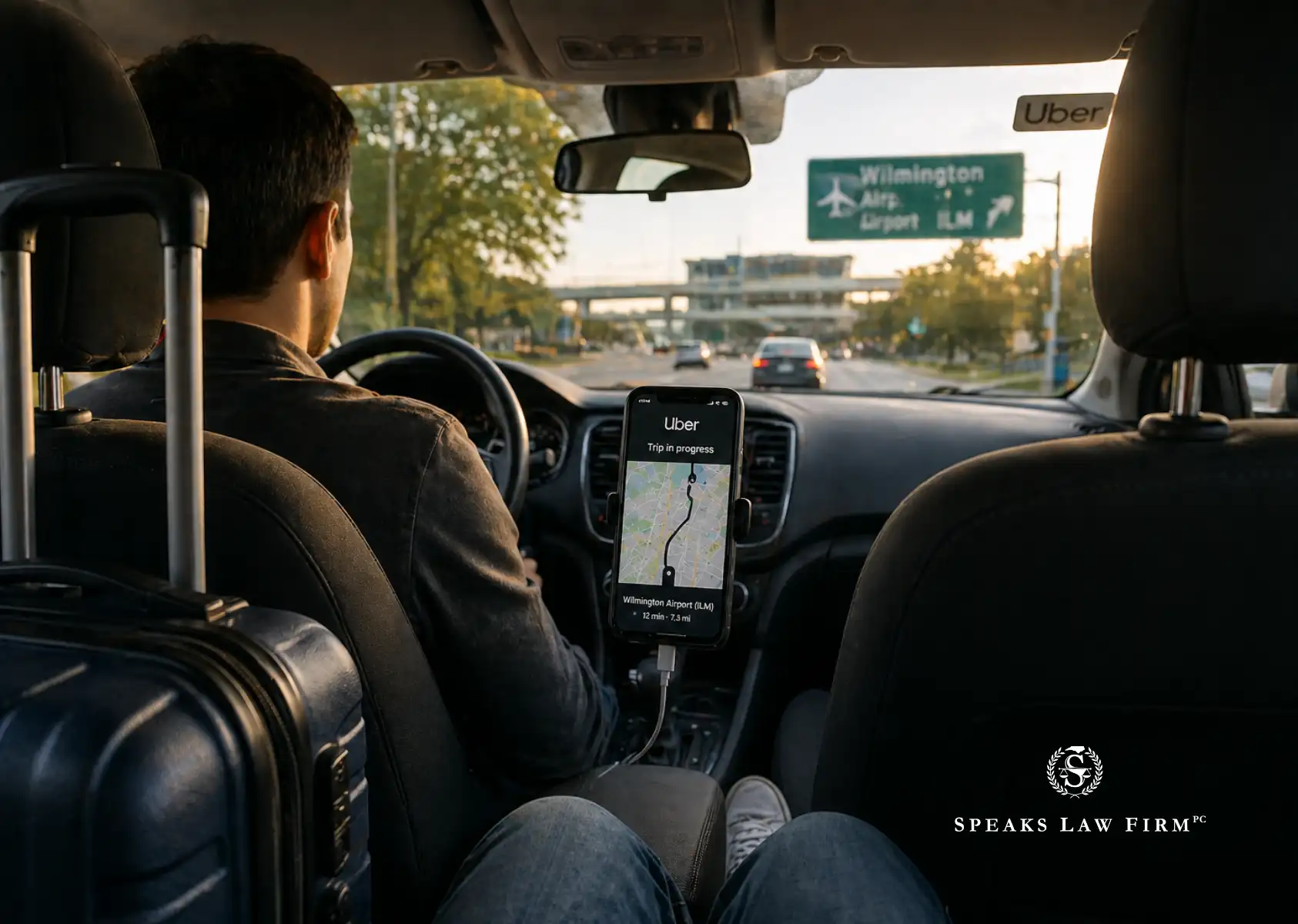 In the scenario above, you were already in the Uber on the way to the airport when the crash occurred. The driver had accepted your ride request and was actively transporting you to the airport. That detail is critical.
When an Uber driver is en route to pick up a passenger or actively transporting one, the insurance coverage available is substantially different from a situation where the driver is simply logged into the app and waiting for a ride. This is where confusion tends to begin. The same Uber driver can have completely different coverage applying to the same crash, depending on what they were doing seconds before impact.
This tiered structure is built into how rideshare insurance works, and it’s one of the first things a Wilmington rideshare accident attorney will examine when reviewing your case.
How Uber’s Insurance Coverage Works in North Carolina
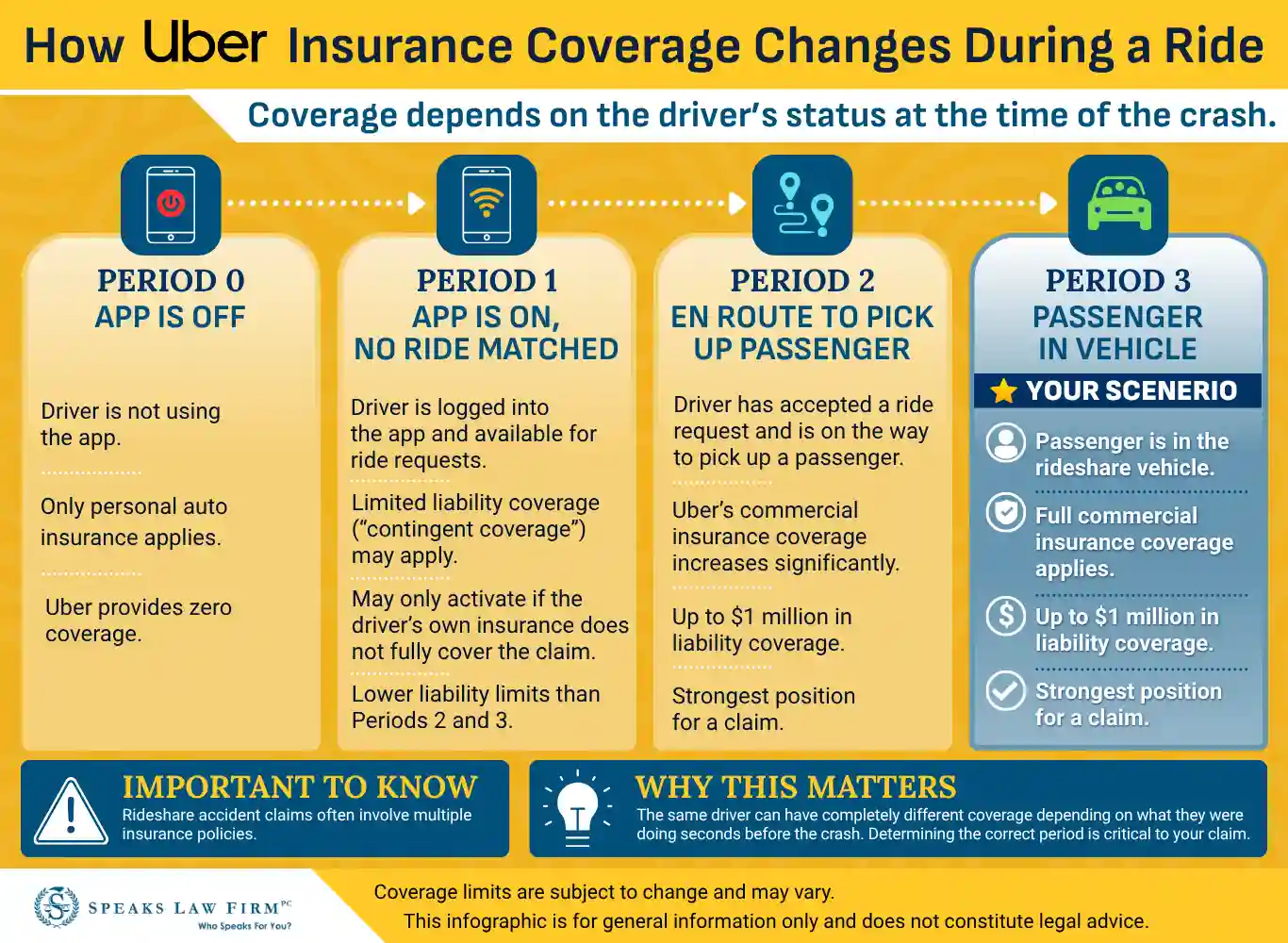
Uber insurance coverage in North Carolina is structured in tiers based on the driver’s status at the time of the accident. Knowing how each tier applies is one of the most foundational pieces of any rideshare accident case. Uber’s insurance coverage structure is publicly outlined and widely used by insurers when evaluating claims.
Period 0: App Is Off
When the Uber app is completely off, the driver’s personal auto insurance policies apply. Uber provides zero coverage in that scenario. If a driver causes a car accident involving another vehicle while completely off the platform, any claim runs entirely through their personal insurance.
Period 1: App Is On, No Ride Matched
Once the driver logs into the app and begins accepting ride requests but hasn’t matched with a passenger yet, limited liability coverage may apply. This is sometimes called contingent coverage, and it may only activate if the driver’s own insurance doesn’t fully cover the claim. The liability limits in this period are lower than what applies once a ride is accepted.
This period is also where minimum insurance coverage requirements under North Carolina law set the baseline for what rideshare companies must carry. North Carolina General Statute § 20-280.1 governs the minimum insurance coverage requirements for transportation network companies operating in the state. (N.C. Gen. Stat. § 20-280.1)
Periods 2 and 3: En Route and Transporting
When the driver is en route to pick up a passenger or actively transporting one, Uber’s commercial insurance coverage increases significantly. During these periods, Uber maintains primary commercial liability coverage of up to $1 million. This covers bodily injury, property damage, and additional losses. This coverage is primary, meaning it applies before any other policy, and the limits are substantially higher than what applies during Period 1.
Because you were already in the vehicle when the crash occurred, your situation falls squarely into Period 3. Uber’s commercial insurance coverage is central to your claim, and rideshare insurance is almost certainly the policy in play.
 Who Is Liable in a Rideshare Accident?
Determining who is liable in an Uber accident is rarely immediate or obvious, even in cases where the cause of the crash seems clear.
Liability could fall on one or more of the following parties:
- The Uber driver, if their negligence caused or contributed to the crash
- Other drivers involved, if a third-party vehicle played a role
- Uber itself, in limited circumstances where its conduct or policies contributed to the harm
- A vehicle manufacturer, if a mechanical defect contributed to the collision
- Commercial drivers operating trucks or fleet vehicles who may carry separate commercial liability coverage
When more than one party shares responsibility, your claim becomes more complex. That’s why determining liability is one of the most consequential steps in any rideshare accident case, and why it matters who is in your corner when those conversations begin with the insurance companies. Once coverage is identified, the next challenge is how those policies are actually applied.
Why Insurance Companies Complicate These Cases
After a crash involving a rideshare vehicle, insurance companies begin building their position quickly. They’re not waiting, and they’re not neutral.
They immediately look at:
- The driver’s status in the Uber app at the moment of impact
- Police reports and accident report details
- Witness statements from people at the scene
- The vehicles involved and the mechanics of how the crash occurred
At the same time, more than one insurance policy may be involved. You could be dealing with Uber’s insurance, the Uber driver’s personal auto insurance, other drivers’ policies, and possibly your own uninsured or underinsured motorist coverage if applicable. That overlap is where Uber accident claims frequently become contested.
Insurance companies may disagree about which policy applies, how much liability coverage is triggered, and which party bears primary responsibility. Those disagreements directly affect your fair compensation and can delay or reduce what you may ultimately receive if you’re not prepared for them.
How North Carolina’s Contributory Negligence Rule Affects Your Claim
North Carolina applies one of the strictest fault standards in the country, and it has direct consequences for anyone injured in an Uber accident here.
Under the contributory negligence rule, if you’re found even one percent at fault for the crash, you may be completely barred from recovering compensation. That applies even in cases involving rideshare drivers where your role in the crash was minor or disputed.
Because of this, insurance companies representing Uber, the driver, or any other party will look closely at every detail. Their goal is to find a basis to argue that you contributed to what happened, even marginally. A finding of one percent fault on your part is enough to shut down your claim under North Carolina law.
This is why how you handle the claim from the very beginning matters. Recorded statements, social media activity, and even the sequence in which you report the accident can all factor into how fault is assigned.
Filing Deadlines Also Apply
Beyond fault rules, timing matters. Personal injury claims in North Carolina generally carry a three-year statute of limitations. This deadline is established under N.C. Gen. Stat. § 1-52(16), which governs the time limits for filing claims involving personal injury.
Missing this deadline forfeits your right to pursue compensation, regardless of how strong your case is.
Rideshare Accident Cases vs. Standard Car Accident Claims
A rideshare accident case isn’t handled the same way as a typical car accident claim, and treating it like one is a common mistake.
The involvement of rideshare companies adds layers that simply don’t exist in standard personal injury cases:
- Coverage depends entirely on app activity at the time of the crash, not just whether a rideshare vehicle was involved
- Multiple insurance policies may apply simultaneously or in sequence, and the order matters
- Uber’s classification of drivers as independent contractors shapes how liability insurance attaches and what arguments Uber can make to distance itself from the driver’s conduct
- Rideshare services operate under state-specific regulations that affect what commercial drivers must carry and what coverage minimums apply
Cases involving Uber and Lyft drivers require closer investigation into how the crash happened, which coverage tier applies, and how the various parties interact under North Carolina law. They also tend to involve more complex insurance negotiations, which is why it matters to have someone who knows the rideshare insurance landscape in your corner.
What Compensation May Be Available After an Uber Accident
After a crash involving a rideshare vehicle, the financial impact rarely stops at the emergency room. Injuries compound, treatment continues, and bills accumulate while you’re also missing work and managing the stress of dealing with multiple insurance companies.
Compensation in a rideshare accident case may cover:
- Medical expenses, including emergency treatment, follow-up care, surgery, physical therapy, and future medical costs tied to the injury
- Lost wages and lost income if the injury kept you out of work during recovery or affected your long-term earning capacity
- Pain and suffering for the physical and emotional toll of the crash and its aftermath
- Emotional distress damages in cases involving serious trauma or lasting psychological effects
- Property damage for your personal belongings or vehicle affected in the crash
- Wrongful death damages in cases where a family member was killed in an Uber accident
In serious cases, pursuing fair compensation means accounting for the full picture, not just immediate costs. The goal is a fair settlement that reflects what you’ve actually lost, including what you’ll continue to lose going forward. Maximum compensation isn’t just about the bills you can see today.
What to Do After an Uber Accident in Wilmington
 Once you’re past the initial crash, the focus shifts to protecting your claim and making sure critical details aren’t lost. In the days following an Uber accident, small decisions can shape how your case develops.
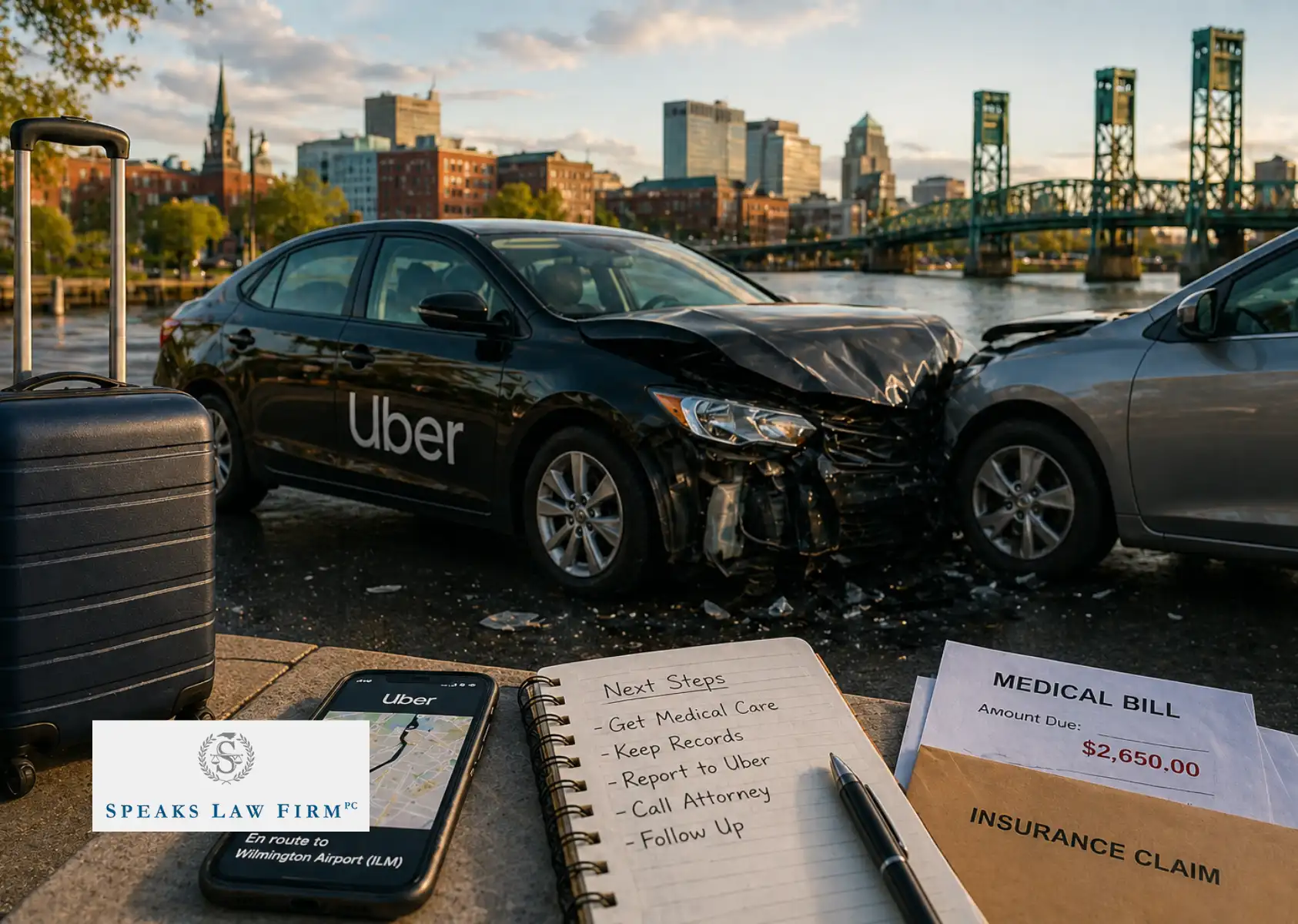
Seek Medical Treatment and Document Everything
Even if your injuries didn’t feel severe at first, follow-up medical care and documentation are important. Symptoms of concussions, soft tissue injuries, and internal trauma often emerge in the days after a crash. Medical records and a documented treatment timeline become central evidence in personal injury cases.
Preserve Your Uber Trip Information
The Uber app retains details about your trip, including the driver, the route, and the timestamp of the ride. Save screenshots of your trip summary and any receipts immediately. That data helps establish the driver’s status at the time of the crash and supports your claim that you were an active passenger, placing the accident squarely in Period 3 coverage.
Be Careful With Insurance Communications
After a car accident involving a rideshare vehicle, you’ll likely hear from insurance companies quickly. Before providing any recorded statements, understand how those conversations may be used. Insurance adjusters are trained to gather information that can be used to minimize or deny claims.
Keep Organized Records
Staying organized protects your ability to pursue compensation later. Focus on retaining:
- Copies of all medical bills and treatment records
- Documentation of missed work and lost wages
- All communications with insurance companies
- The accident report and any police reports from the scene
- Witness contact information if you collected it at the scene
Consider Underinsured Motorist Coverage
If the at-fault driver’s liability coverage isn’t sufficient to cover your losses, your own underinsured motorist coverage may apply. This is worth reviewing with an attorney early on, as the process for accessing that coverage has its own requirements and timelines.
When to Speak With Rideshare Accident Lawyers in Wilmington, NC
You don’t have to wait until the claims process feels overwhelming to ask questions. After an Uber accident, reaching out to rideshare accident lawyers in Wilmington, NC early can make a meaningful difference. An attorney who handles rideshare accident cases can review the applicable insurance policies, identify potential sources of compensation, and step in before you’ve said something on the record that hurts your claim.
This is particularly important in situations where:
- You’re dealing with serious injuries requiring ongoing treatment
- Insurance companies dispute which coverage applies, or they deny your claim
- Multiple parties were involved in the crash
- You’re unsure whether to accept a settlement offer or whether it reflects the full value of your claim
- You want to understand how North Carolina’s contributory negligence rule affects your specific situation
An attorney can take over communication with the insurance companies on your behalf, evaluate your medical records and losses, and build the attorney-client relationship that positions your case for the strongest possible recovery under the law. Timing matters. The earlier you get ahead of the insurance companies, the better positioned you are likely to be.

Rideshare Accidents Are Complex. Put the Right Legal Team in Your Corner.
You don’t have to wait until the claims process feels impossible to get answers. An Uber accident doesn’t just affect you in the days following the crash. The medical bills, time away from work, and pressure from insurance companies can extend long after the accident occurred. And in North Carolina, the contributory negligence rule means that even a one percent finding of fault on your part can bar you from recovering anything at all.
That’s why early decisions matter. At Speaks Law Firm, our rideshare accident lawyers in Wilmington, NC, examine what happened, identify the potentially liable parties, and handle all communication with the insurance companies on your behalf. We review your medical records, your injuries, and the full impact the crash has had on your life so you have a clear picture of where your case stands, what options are available to you, and how to move forward.
Our team handles rideshare accident cases on a contingency fee basis, meaning you pay nothing unless we recover compensation for you. Call (910) 341-7570(910) 341-7570 or submit our confidential online form to schedule your FREE case evaluation.
While you wait, we invite you to check out our podcast, The Verdict with the Catastrophic Injury Lawyer Clarke Speaks.
Who Speaks for You? We Do!
Copyright © 2026. Speaks Law Firm. All Rights Reserved.
The information in this blog post (“post”) is provided for general informational purposes only and may not reflect the current law in your jurisdiction. No information in this post should be construed as legal advice from the individual author or the law firm, nor is it intended to be a substitute for legal counsel on any subject matter. No reader of this post should act or refrain from acting based on any information included in or accessible through this post without seeking the appropriate legal or other professional advice on the particular facts and circumstances at issue from a lawyer licensed in the recipient’s state, country, or other appropriate licensing jurisdiction.
Speaks Law Firm902 Market St. Wilmington, NC 28401(910) 341-7570https://www.speakslaw.com/