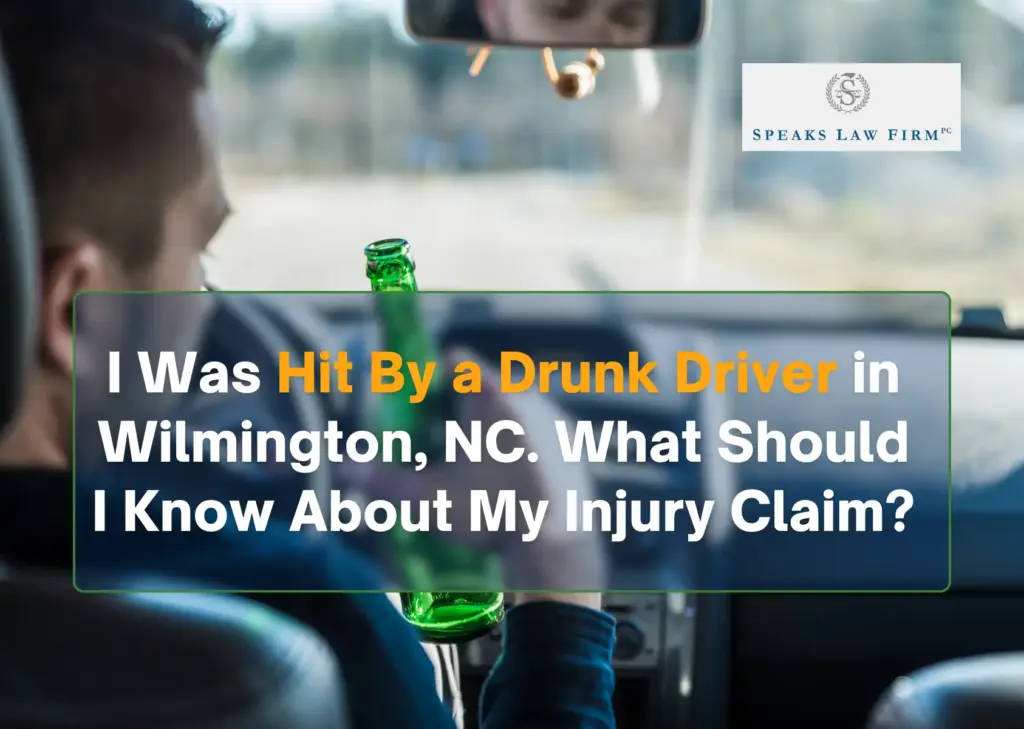
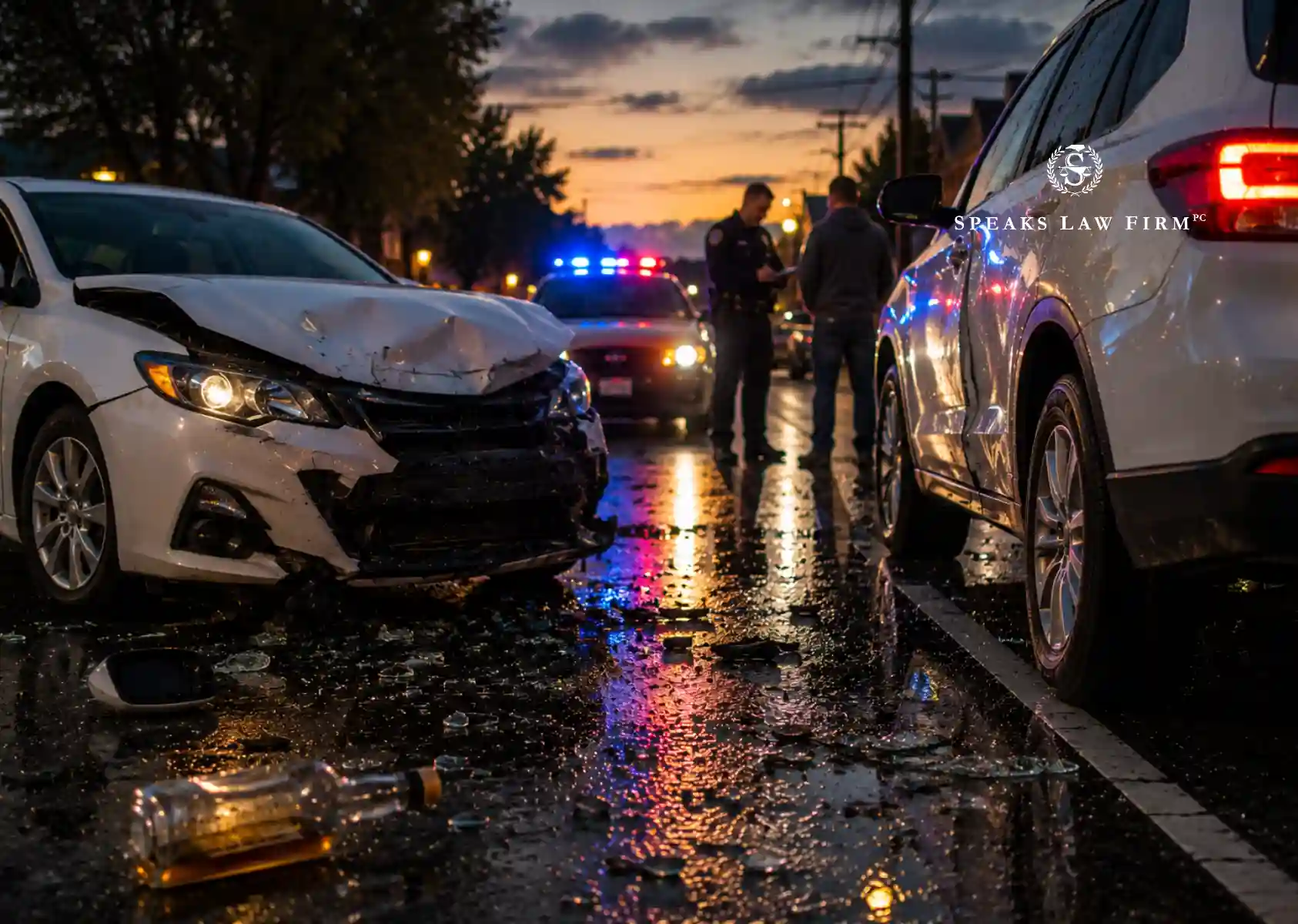
If you were hit by a drunk driver, you already know how quickly life can become more complicated. You’re trying to recover from your injuries while managing medical appointments, medical bills, time away from work, and conversations with insurance companies. At the same time, you may assume that because the other driver was intoxicated, recovering compensation will be straightforward.
Unfortunately, that’s not always the case. An arrest tells you the police believed the other driver was impaired. It doesn’t tell you how much your claim is worth, whether the insurance company will accept liability without a fight, or how North Carolina’s contributory negligence rule might come into play. Those are separate questions, and the answers depend on the evidence, the paperwork, and decisions you make in the days and weeks after the crash.
Understanding how these cases work before making important decisions can place you in a stronger position throughout the claims process. It’s the difference between reacting to whatever the insurance company sends your way and building a claim that reflects what the crash really cost you, physically, financially, and otherwise.
If you were hit by a drunk driver in Wilmington or anywhere in North Carolina, here’s what you should understand about protecting your injury claim.
At a Glance
Here’s what to keep in mind as your claim moves forward:
- Drunk driving accidents often involve both criminal proceedings and a separate civil claim for compensation.
- A drunk driver’s arrest does not automatically lead to financial recovery for your injuries.
- North Carolina’s contributory negligence rule can affect your ability to recover compensation, even when the other driver was impaired.
- Evidence such as the accident report, witness statements, blood alcohol concentration (BAC) testing, and medical records can play an important role in your personal injury claim.
- Compensation may include medical expenses, lost wages, future medical care, property damage, emotional distress, and, in some cases, punitive damages.
- Speaking with a Wilmington drunk driving accident lawyer early in the process can preserve evidence and protect your legal rights.

Why Drunk Driving Accidents Are Different From Other Car Accident Cases
Although many drunk driving accidents involve two vehicles, impaired drivers can also injure motorcyclists, bicyclists, pedestrians, and others sharing the road. Regardless of how the collision occurred, drunk driving accidents often present legal issues that don’t arise in other injury claims.
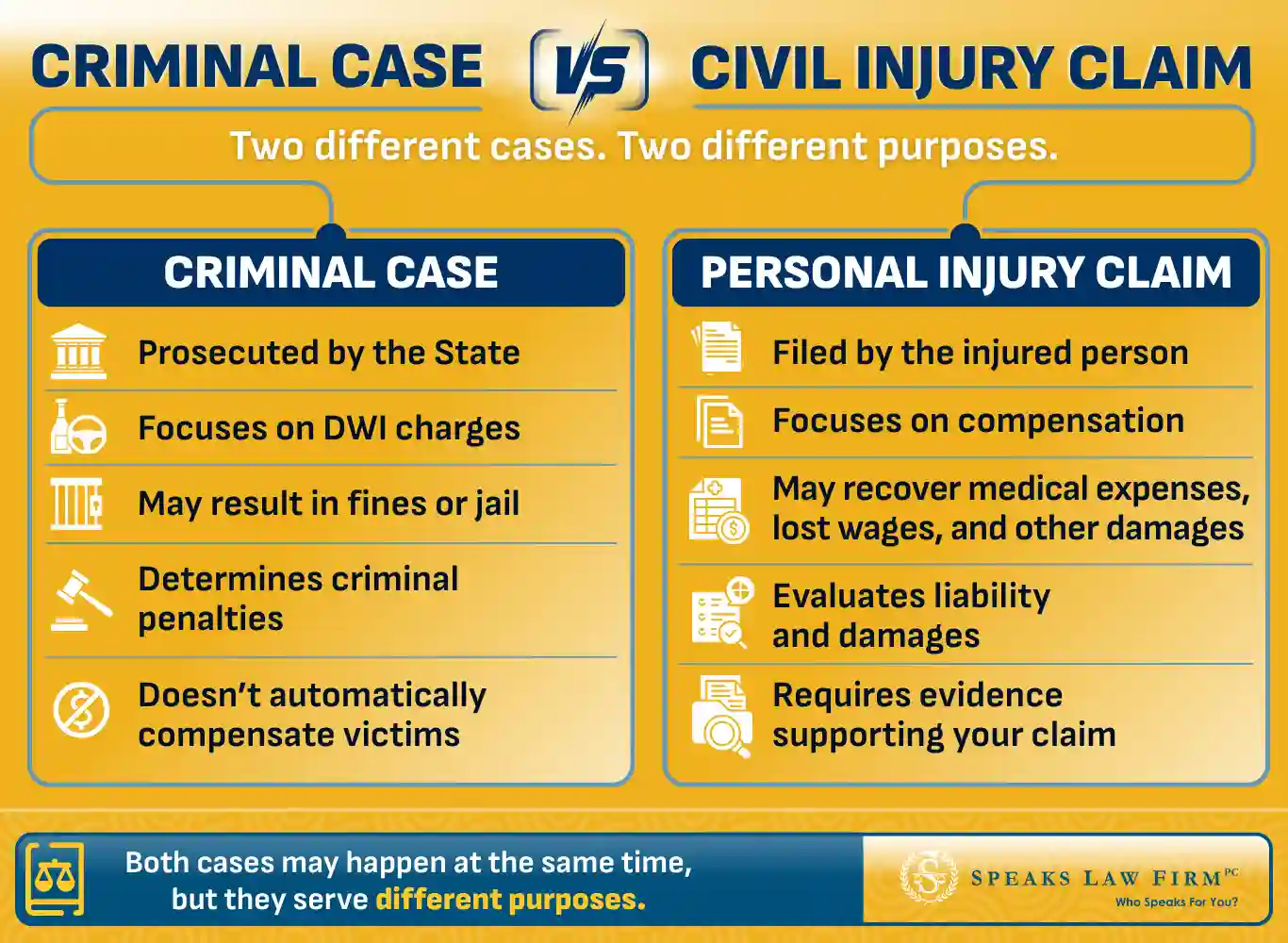
When an impaired driver causes a crash, there are typically two separate legal matters taking place at the same time:
- A criminal case brought by the State of North Carolina against the drunk driver, defined under N.C. Gen. Stat. § 20-138.1 as operating a vehicle with an alcohol concentration of 0.08 or more, or while impaired by any substance.
- A civil claim filed by the injured person to recover financial compensation for their losses.
These cases serve different purposes. Criminal charges focus on whether the driver violated North Carolina law by driving while impaired and what penalties they may face, such as fines, license revocation, or jail time. Your civil claim, however, focuses on how the crash affected your life and whether you can recover compensation for your injuries and financial losses.
Because of this distinction, even if the drunk driver pleads guilty or is convicted, your personal injury claim still requires evidence showing how the collision caused your injuries and the full extent of your damages.
A Criminal Conviction Doesn’t Automatically Resolve Your Injury Claim
It’s easy to think that an arrest means your injury claim will be straightforward. Unfortunately, that’s not always true. Insurance companies don’t simply write a check because the at-fault driver was intoxicated. Instead, they’ll still examine questions such as:
- Were your injuries caused by this drunk driving crash?
- How serious are your injuries?
- Are all of your medical treatments related to the collision?
- What are your future medical needs?
- Did anything else contribute to the crash?
Even when liability appears clear, insurance companies often look for ways to reduce what they pay. That makes documentation, prompt medical treatment, and preserving evidence essential in drunk driving accident claims, just as they are in any other personal injury case.
North Carolina’s Contributory Negligence Rule
One legal concept that can significantly affect personal injury cases in North Carolina is contributory negligence.
In simple terms, contributory negligence means that if an injured person is found even one percent responsible for causing a collision, they may be barred from recovering compensation from the other driver. North Carolina is one of only five jurisdictions that still follows this pure contributory negligence rule, making it one of the most significant legal rules affecting drunk driving accident claims.
That can come as a surprise when the other driver was intoxicated. For example, an insurance company may argue that you were speeding, failed to keep a proper lookout, changed lanes improperly, or contributed to the collision in some other way.
Even if those arguments ultimately aren’t supported by the evidence, they demonstrate why each detail surrounding the crash can affect how your claim is evaluated. Under N.C. Gen. Stat. § 1-139, the party raising contributory negligence as a defense carries the burden of proving it, not the injured person.
A drunk driver may have made the reckless decision to drive drunk, but insurance companies still investigate each aspect of what happened before deciding whether to accept liability or dispute portions of a claim.
Knowing how contributory negligence works is one reason many people choose to seek legal counsel before giving recorded statements or accepting an early settlement offer.
What Insurance Companies May Look for After a Drunk Driving Crash
Even after the other driver’s impairment has been established, the insurance company may continue examining every aspect of your claim. In North Carolina, this becomes particularly relevant because the state’s contributory negligence rule may factor into the insurance company’s evaluation.
Depending on the circumstances, an insurance company may examine questions such as:
- Did anything you did contribute to the collision?
- Did you delay seeking medical attention?
- Do your medical records document injuries that existed before the crash?
- Are all of your current symptoms related to the collision?
- Have your injuries prevented you from returning to work?
- Is additional evidence available that supports or contradicts either driver’s version of events?
These questions don’t necessarily mean your claim lacks merit. Instead, they reflect the process insurance companies use to evaluate liability and damages before deciding how to respond to a claim. Understanding how these investigations work illustrates why preserving evidence and documenting your injuries remain essential, even when the other driver was clearly impaired.

Building a Strong Drunk Driving Injury Claim Starts With the Right Evidence
Evidence doesn’t just establish what happened. It builds the story of how another person’s reckless behavior changed your life.
Some evidence can be collected immediately after the crash, while other evidence may disappear if it isn’t preserved promptly. Gathering documentation and evidence as early as possible can support your personal injury claim while preserving details that may become more difficult to collect over time.
Evidence That Helps Explain How the Crash Happened
The Accident Report
The responding officer’s accident report often contains observations about the driver’s behavior, witness statements, road conditions, diagrams of the collision, and whether the officer suspected impaired driving.
Blood Alcohol Concentration Testing
Evidence of a driver’s blood alcohol concentration may become important in both the criminal case and your civil claim. Depending on the circumstances, testing may also reveal the presence of illegal drugs or other impairing substances.
Witness Statements
Independent witnesses can provide valuable information about the driver’s behavior before the collision, including whether they observed dangerous driving, excessive speed, or other signs of impairment.
Photos, Video, and Vehicle Damage
Photographs of the vehicles, roadway conditions, visible injuries, and surrounding area can preserve details that may no longer exist weeks or months later. In some situations, nearby businesses or traffic cameras may also capture footage of the collision.
Evidence That Documents the Impact of Your Injuries
Medical Records
Your medical records connect your injuries to the crash while documenting the treatment you’ve received, recommendations from your physicians, and how your condition has progressed over time.
Financial Documentation
Medical bills, receipts, repair estimates, proof of lost wages, and other records demonstrate the financial impact the collision has had on your life.
Some Serious Injuries Take Time to Fully Appear
After a collision involving an intoxicated driver, adrenaline can mask symptoms that don’t become apparent until hours or even days later. That’s why it’s important to seek medical attention as soon as possible, even if you initially believe your injuries are minor.
Some injuries may worsen over time, including:
- Traumatic brain injuries
- Neck and back injuries
- Internal injuries
- Soft tissue injuries
- Spinal injuries
- Broken bones
A serious injury can affect much more than your immediate recovery. Ongoing treatment, rehabilitation, physical therapy, and future medical care may all become part of your recovery plan.
In addition to protecting your health, receiving timely medical attention creates documentation that may become important if you later pursue a personal injury claim.
Looking Beyond Today’s Medical Bills
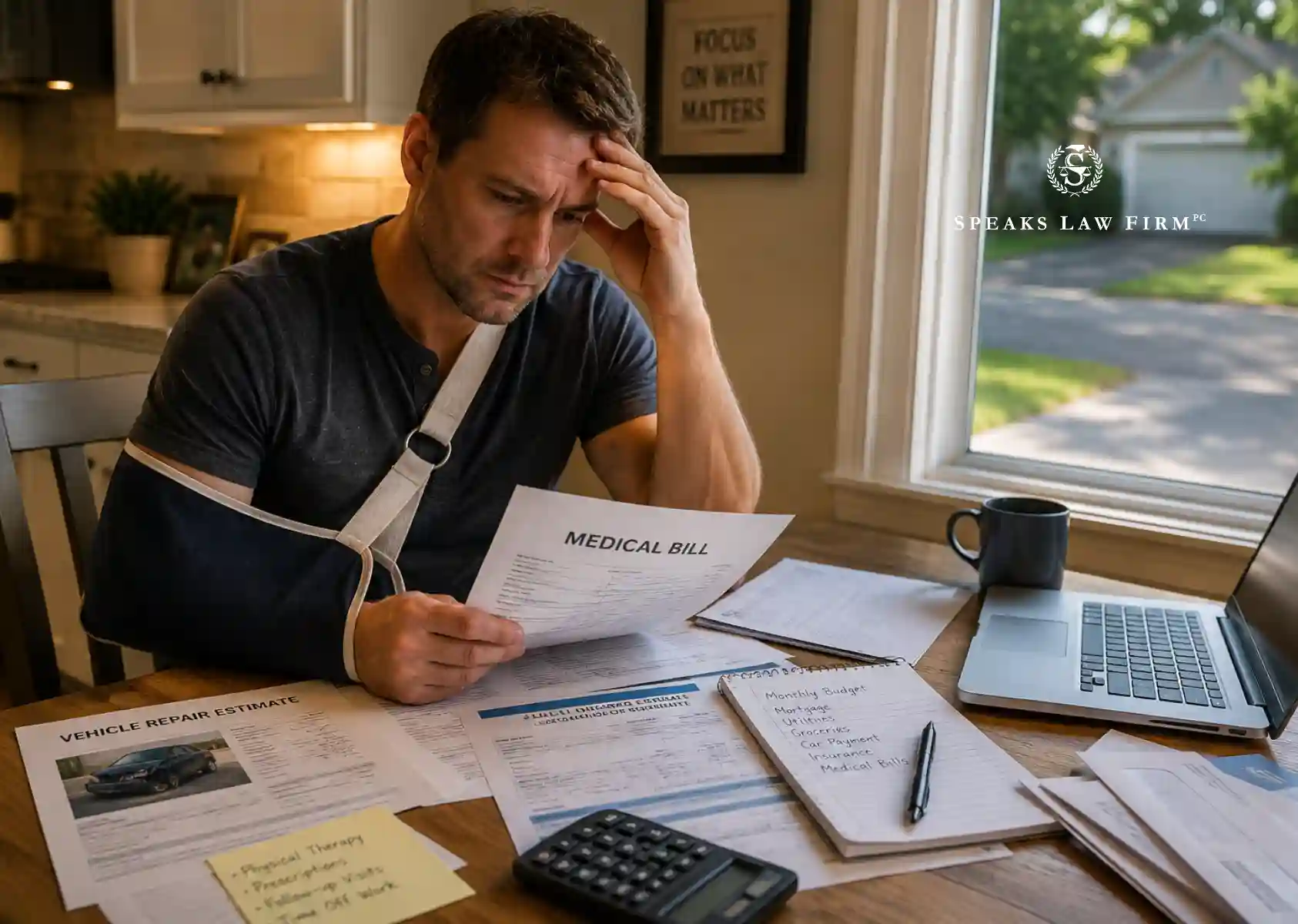
After a drunk driving accident, life doesn’t stop while you recover. Medical appointments begin filling your calendar. Your vehicle may be in the repair shop or declared a total loss. You may be trying to keep up with household bills while missing work, all without knowing how long your recovery will take. For many people, the financial uncertainty becomes almost as stressful as the injuries themselves.
You may initially focus on the bills already in hand, but those costs are only part of the picture. A serious drunk driving accident can create financial challenges that extend well past current medical expenses and rehabilitation, into lost wages, reduced future earning capacity, vehicle repairs, and the physical and emotional toll of the crash itself.
When injuries permanently affect your ability to work or enjoy daily life, calculating future damages can become one of the most significant parts of a case. Evaluating those losses often requires more than simply adding up today’s expenses.
What Happens if the Drunk Driver Doesn’t Have Enough Insurance?
Even when another driver clearly caused the collision, insurance coverage isn’t always enough to fully compensate you for your losses. Some drunk drivers carry only the minimum required insurance coverage, while others may have no insurance at all. When a collision causes catastrophic injuries, those policy limits may be exhausted long before all of an injured person’s damages are addressed.
Depending on the circumstances, additional sources of recovery may exist, including:
- Uninsured motorist coverage
- Underinsured motorist coverage
- Umbrella insurance policies
- Other potentially liable parties in limited situations
Identifying all available sources of recovery often requires a careful review of the applicable insurance policies and the facts surrounding the collision.
Can You Recover Punitive Damages After a Drunk Driving Crash?
In many personal injury cases, compensation focuses on making the injured person financially whole by covering losses such as medical expenses, lost wages, property damage, and pain and suffering. However, some drunk driving accidents may involve another type of damages known as punitive damages.
Unlike compensation that addresses the financial and personal impact of a crash, punitive damages are intended to punish particularly reckless conduct and discourage similar behavior in the future. Under N.C. Gen. Stat. § 1D-15, a claimant must prove by clear and convincing evidence that fraud, malice, or willful or wanton conduct was present and related to the injury. They aren’t awarded in each case, and they’re evaluated separately from the damages associated with your injuries and financial losses.
North Carolina generally caps punitive damages at three times compensatory damages or $250,000, whichever is greater. Notably, N.C. Gen. Stat. § 1D-26 exempts claims from that cap when the injury arose from a defendant’s operation of a vehicle under circumstances that would give rise to an impaired driving charge under § 20-138.1.
Whether punitive damages are available depends on the specific facts of the case and North Carolina law. Driving while impaired doesn’t automatically lead to punitive damages, but evidence showing reckless behavior, a high blood alcohol concentration, or other aggravating circumstances may affect how a case is evaluated.
Mistakes That Can Affect a Drunk Driving Accident Claim
The days and weeks after a crash can be overwhelming. Medical appointments, conversations with insurance companies, missed work, and vehicle repairs often happen all at once. During that time, seemingly minor decisions may affect a personal injury claim.
Common mistakes include:
Delaying Medical Treatment
Waiting to seek medical attention may not only affect your recovery, but may also make it more difficult to connect your injuries to the collision.
Giving Recorded Statements Too Soon
An insurance adjuster may request a recorded statement early in the claims process. Before providing detailed statements about your injuries or how the collision occurred, it can be useful to understand how that information may be used during an insurance claim.
Accepting an Early Settlement
Some injuries become more apparent over time. Accepting a settlement before your medical condition stabilizes could leave you responsible for future treatment costs that weren’t considered during negotiations.
Failing to Preserve Documentation
Medical bills, receipts, repair estimates, wage records, photographs, and correspondence with insurance companies can all become valuable evidence as a claim progresses.
How Speaks Law Firm Approaches Drunk Driving Accident Claims
Building a successful personal injury claim after a drunk driving crash takes more than proving impaired driving. The evidence must show how the collision occurred, document the full extent of your injuries, and address the issues insurance companies commonly raise during their investigation.
At Speaks Law Firm, our Wilmington drunk driving accident lawyers look beyond the initial police report. Our legal team works to:
- Preserve important evidence before it’s lost
- Review witness statements and crash documentation
- Obtain available blood alcohol concentration evidence
- Identify all applicable insurance coverage
- Evaluate how your injuries may affect your future medical needs, earning capacity, and quality of life
Each drunk driving accident claim presents different challenges. One case may involve disputed liability. Another may require evaluating multiple insurance policies, catastrophic injuries, or long-term medical care. Identifying those issues early lets us build a legal strategy around the specific facts of your case rather than a one-size-fits-all approach.
Insurance companies still evaluate the severity of your injuries, review your medical records, examine the available evidence, and decide whether they believe any issues exist regarding liability or damages. Their evaluation may not reflect the full impact the crash has had on your life.
Because North Carolina follows a pure contributory negligence rule, our attorneys also work to anticipate potential defenses before they become obstacles during settlement negotiations or litigation. Building a thorough case from the beginning can put you in a stronger position as your claim moves forward.
Don’t Wait Too Long to Protect Your Rights
North Carolina sets a three-year deadline for personal injury lawsuits under N.C. Gen. Stat. § 1-52(5), running from the date of the accident, with limited exceptions such as the discovery rule for injuries that aren’t immediately apparent.
While three years may sound like plenty of time, waiting can make it more difficult to build a strong claim. Witness memories fade, surveillance footage may be overwritten, physical evidence can disappear, and important documentation may become harder to collect.
Whether you’re dealing with serious injuries, ongoing medical treatment, or conversations with insurance companies, taking steps to preserve evidence early can protect your legal rights and place you in a stronger position if you decide to pursue a personal injury claim.

When a Drunk Driver Changes Your Future, Put Experience and Strategy on Your Side
Being injured by a drunk driver is about far more than the collision itself. The weeks and months that follow often bring medical appointments, financial uncertainty, conversations with insurance companies, and questions about what comes next. Even when the other driver was clearly impaired, protecting your interests under North Carolina law requires more than showing that someone made the reckless decision to drive after drinking.
At Speaks Law Firm, our team approaches each case with a careful, strategic evaluation. From preserving important evidence and reviewing available insurance coverage to evaluating future medical needs and anticipating the defenses insurance companies may raise, we build each claim around the facts of your situation and the full impact the collision has had on your life.
Our goal isn’t simply to move a case through the legal system. It’s to provide straightforward guidance, thorough preparation, and dedicated representation from the moment you contact us through the resolution of your claim.
Our Wilmington drunk driving accident attorneys handle personal injury cases on a contingency fee basis, so there are no upfront costs, and you pay nothing unless we recover compensation for you. If you were hit by a drunk driver in Wilmington or elsewhere in North Carolina, call Speaks Law Firm at (910) 341-7570(910) 341-7570 or complete our confidential online form to schedule your FREE consultation.
While you wait, we invite you to check out our podcast, The Verdict with the Catastrophic Injury Lawyer Clarke Speaks, where we discuss legal issues affecting injured individuals and their families.
Who Speaks for You? We Do!
Copyright © 2026. Speaks Law Firm. All Rights Reserved.
The information in this blog post (“post”) is provided for general informational purposes only and may not reflect the current law in your jurisdiction. No information in this post should be construed as legal advice from the individual author or the law firm, nor is it intended to be a substitute for legal counsel on any subject matter. No reader of this post should act or refrain from acting based on any information included in or accessible through this post without seeking the appropriate legal or other professional advice on the particular facts and circumstances at issue from a lawyer licensed in the recipient’s state, country, or other appropriate licensing jurisdiction.
Speaks Law Firm902 Market St. Wilmington, NC 28401(910) 341-7570https://www.speakslaw.com/