Video Summary
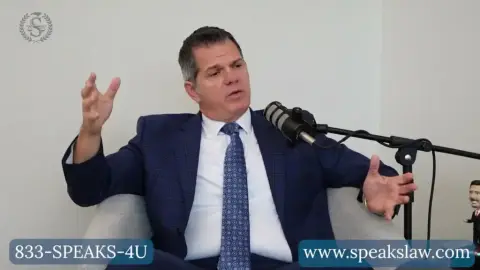
Legal professionals from the Speaks Law Firm explain that motorcycle accidents often result in severe physical trauma, necessitating aggressive strategies to secure full financial recovery. Because motorcycle injuries are frequently catastrophic, attorneys must meticulously stack insurance policies and identify high-value defendants to cover extensive medical costs. Success in these claims depends on immediately preserving evidence like skid marks and vehicle debris before they vanish from the scene. The firm utilizes a dedicated litigation team composed of former insurance insiders to pressure companies into offering fairer settlements without the need for a trial. Furthermore, the video warns consumers about deceptive advertising regarding case outcomes, clarifying the difference between symbolic court awards and the actual funds collected for clients. Ultimately, early legal intervention and the use of reconstruction professionals are presented as vital components for building a high-value personal injury case.
Transcription of the Video
Clarke: Let’s talk for a minute about motorcycle accident claims. What are some of the first things that come to your mind when I mention motorcycle accidents?
Jeff: Usually, the injuries are quite severe because a car has hit a motorcycle and thrown somebody off.
Clarke: There are no seat belts on motorcycles, and we rarely see fender benders; therefore, frequently the injuries are quite severe. What else comes to mind?
Jeff: Typically, we are looking for extra coverage. Many people do not know that you can actually use your automobile policies to stack on top of your motorcycle policy, and even people who live with you who have policies, we can stack many of those together.
Clarke: Because these injuries are severe, finding coverage to compensate people for these damages becomes important. We have to do a fairly exhaustive search and use our investigative team to find additional sources of coverage.
Jeff: Exactly.
Clarke: What else comes to mind?
Jeff: Well, we are usually trying to look and see if there is a larger defendant we can pursue. Was it a commercial truck that hit somebody? Was it somebody who was impaired? These are ways that we can pursue and secure additional damages for these claims.
Clarke: What about evidence? What are some of the things that we need to do to try to preserve evidence in a case immediately after an accident? Should people call us immediately, or should they wait and see?
Jeff: We want them to call us immediately because the evidence will disappear: pieces of the motorcycle on the ground that show the point of impact, skid marks, and photographs of the motorcycle itself. Frequently, they are crushed and will get hauled off to a junkyard somewhere.
Clarke: The vantage point or the view from a particular location is also something we want to capture. We want to bring our experienced professionals in accident reconstruction and our investigative team in as quickly as we can in order to be able to preserve that evidence and present it to the insurance company. What are some of the other things that are important in these kinds of cases?
Jeff: Well, we want to build value in these cases. Large cases do not just happen; we have a series of experienced professionals, from economists to people who can evaluate future medical expenses that you might have. We have engineers who can perform accident reconstruction. All these types of experienced professionals we want to involve early.
Clarke: We have an entire podcast series devoted to building these types of cases, ‘Catastrophic Comeback’ and ‘A Million-Dollar Casemaker’ are examples of those, and we would encourage people to check those out if they want more information. Why is a litigation team important? Nobody necessarily wants to try their case, so why is it important that we have a strong and intentionally built litigation team?
Jeff: The majority of our team, in fact, all of our team, has done insurance defense at one point or been claims adjusters. They know how the insurance companies think, and they know what they are going to do. The insurance companies know us; they know if you are not going to file a lawsuit or try a case, and they will not offer you as much money as they would to lawyers that they know will take a case to a jury.
Clarke: To me, it is like when my kids were growing up: I wanted them to take self-defense classes, not because I wanted them to fight, but because I wanted bullies to find somebody else to fight and just leave my kids alone. It is a similar context here. The idea is that if we can go to trial and we do go to trial, we may not have to go to trial as frequently.
Jeff: That is exactly right. The hope is that they do not want to try the case against us, so they will provide improved settlement offers upfront.
Clarke: And has that been our experience?
Jeff: That has been our experience.
Clarke: Let me talk for a minute about things we see on billboards and websites regarding firms recovering specific amounts. In your experience, are all those firms recovering that money, or are they being awarded that money? How does that compare to our record?
Jeff: They do not necessarily say “recovered a million dollars”; they just say “$1 million award”. That can be deceptive. It does not mean they actually collected any of that; they may have just won a verdict against somebody and never received a dime of it. All the numbers that are on our website are amounts that we actually collected in cases: 20 million, 5 million, 3 million. We secured those monies for our clients.
Clarke: So there is often a difference between what was awarded and what was actually recovered on behalf of your clients.
Jeff: That is correct.
Clarke: All right, thank you. Those are the important things that I think you need to consider when you are looking for a motorcycle accident lawyer.