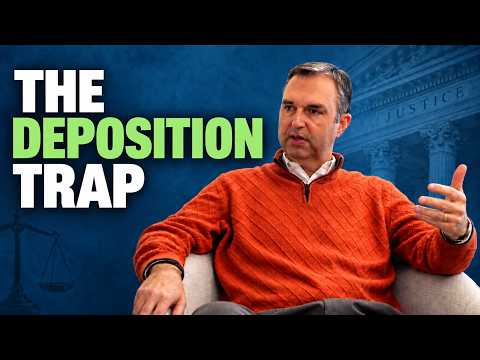
Think twice before you hit “post.” In today’s world, social media could make or break a legal case.
In this episode of The Verdict, Clarke talks with workers’ comp attorney Brian Groesser about how insurance companies and defense attorneys use social media to build or dismantle injury claims. Brian shares real stories from his time as a defense attorney, including cases won solely because of contradictory social media posts. From surveillance tactics to metadata recovery, he explains why nothing you share online is truly private and how even well-intentioned posts can be taken out of context.
If you have an active claim, this episode is an essential reminder: guard your credibility by guarding your social media.
Here’s what we discuss in this episode:
📱 Social media surveillance – Defense teams actively track Facebook, Instagram, TikTok, X, and more. ⚖️ Posts vs. claims – Contradictory content can ruin your credibility with doctors and judges. 🚫 Don’t delete – Metadata can expose deleted posts as evidence tampering. 👀 Friends of friends – Insurers can legally view your posts through mutual connections. 🧠 Golden rule – Don’t post anything you wouldn’t want a judge to see in court.
0:00 – Tracking Social Media
Featured Keyword & Other Tags
Workers comp, insurance, settlement, resignation, payout
Client Links
Learn more about how Speaks Law Firm can help you: https://www.speakslaw.com/
Schedule your FREE case review: https://www.speakslaw.com/attorneys/r-clarke-speaks/#contactFormTarget
Find us on YouTube: https://bit.ly/3R40YMP
TranscriptClick to read
Clarke: I’m Clark Speaks, the catastrophic injury lawyer. Welcome to the Verdict. Welcome back to the Verdict. I’m Clark Speaks. I’m here with Brian Grosser. Brian, I want to talk to you for a minute about social media posts. You mentioned earlier that sometimes, uh, after a workplace accident, uh, insurance companies will conduct surveillance and they’ll follow people around and get videos and all this. And we’ve all that do this for a living have all seen these, uh, sort of grainy photos from a distance. Um, and that can be helpful and that can be harmful in a case, you know, but usually they’ll try to catch you in a moment that looks like you’re fine, even if you might not be. Uh, what I want to talk to you about now is specifically social media and posting on social media and the things that you put on social media. Facebook, TikTok, Instagram, whatever. And how that might impact, uh, your claim. Can you talk to me about that, please?
Brian Groesser: Yeah. So when I did defense work, I had a reputation as being the. The social media guy. Like, I was on the edge of that before most people were in terms of following people online. You know, following their Facebook feed. I used to have, back when it existed, TweetDeck, where it would. I would have claimants and by their Twitter handle, and it would be a live feed. Anytime they would post something, I would see it, right? And so that type of stuff exists, right, where you can follow. And there’s so many different formats, right? And Snapchat, uh, Instagram, Twitter or X, Facebook, there’s all these different formats. YouTube, um, that I’ve settled cases on when I did defense work strictly based off of social media. I have won cases as a defense attorney strictly off of social media. Case in point, there was a lady many, many years ago that had an ankle injury and couldn’t work, couldn’t be on her ankle for more than 15 minutes at a time. Kept telling her doctor that, well, I had her Facebook feed, and her Facebook feed showed her going to the club every weekend in heels and dancing. I won the case. And I won the case, I think largely because of a line that was used at the hearing when I was questioning her. And I said, so what you’re telling me is that you are too hurt to work, but not to twerk. And the judge, I think, really resonated. But the idea is that she’s telling the doctor one thing. Her social media profile is saying the exact opposite. Doctors want what’s best for you as a patient. They are also your advocate, Right. There’s that physician patient relationship, they are going to in a deposition, they will say, I am going to trust my client. What my patient is telling me, I, I am going to believe unless I’m shown something otherwise. You want a doctor to reverse and go 180, you show them social media stuff that goes exactly against what they’re telling you while you’re having the examination. Right. It’s why it’s vitally important to guard your social media. Right. Because people can access it. And here’s the thing that you don’t realize. Friends of friends can access your social media page. If you are the adjuster, it is perfectly legal for them to ask one of your coworkers who is a friend of yours on Facebook for access to your Facebook page. They can’t access it directly. The adjuster can’t access it. They’re not friends with you. But if a coworker is a friend of yours and you’ve got a Facebook page up and you’re doing a bunch of stuff online that shouldn’t be, you know, that goes against what you’re telling the doctors. That adjuster can look at it and can look at it through the eyes of the coworker who’s willing to show them the page. It’s perfectly legal. They’re allowed to do that. And so my advice is don’t, don’t put your life on social media in.
Clarke: That regard, at least during the dependency.
Brian Groesser: Of this claim, during the pendency of your claim. Here’s the other thing. You can’t delete the stuff either, because if you start deleting the stuff, they’re going to track that down through metadata. They have the ability to track that down to see what you deleted when you deleted it, and if you were trying to hide evidence, that type of thing as well. And so my advice is that if you’re hurt now, it can cut both ways. So I’ve had situations where I went back and I didn’t know if this person was being credible or not. Right. We don’t know anybody that comes through our door on either side. Whether you’re working on the plaintiff side or the defense. You don’t know these people. Right. You’re learning about them as the case goes on. And so I had a case that I, uh, have several cases over the years where I would go on social media and I would see them post about going to the doctor that day and how much extreme pain that they were in, and they were hoping that the doctor would be able to help them because they’re posting about it. It’s their life. And they would post about that fairly consistently when they would go to the doctors. And this was well before I was ever involved in the case or either attorney was involved in the case. It tended to lend to the credibility that what they were saying was accurate. Because this is before they ever had representation. This is before this was ever in litigation. And here they are posting
00:05:00
Brian Groesser: on social media the amount of pain that they’re in because their arm is killing them and they’re at the doctor to try to figure out if they can, uh, alleviate the pain. Well, that’s pretty credible. That is good Facebook posting. What’s bad Facebook posting is what that lady did, right? And by telling the doctor that she can’t walk for more than 15 minutes and on Saturday she’s dancing at the club for two hours in high heels. That’s not a good look. And I’m telling you right now, it’s easy for these insurance carriers. They have surveillance vendors and social media vendors. So not only do they have surveillance companies that will go out and stake you out and sit at your house and follow your car and follow you to wherever you may be going that day, they also have folks that do deep dives into your social media accounts and they will produce a 50 page report that shows all of your postings from the past year on, um, YouTube and on Facebook and on X and all of these different platforms. And it gives them the opportunity to investigate possible defenses, but also to use surveillance. Because we would use surveillance back in the day by saying, oh, this person always goes to this particular park on, um, Saturdays to go play kickball, or something like that. So guess where the surveillance guy is going to be on Saturday at the kickball park watching you play kickball. So, uh, be careful, be careful what you post on social media. In fact, I would suggest, much like when you talk to your employer, you don’t talk to your employer about your claim. If you have a active claim you don’t talk to, you can talk to them about return to work and employment related stuff, but you don’t talk about your claim. Same thing’s true in social media. Don’t post anything on social media that you wouldn’t want in front of a judge at a future hearing.
Clarke: Yeah, I recall a claim, a case we were working on a few years ago where we had an injured person and the person had a pretty serious injury that was negatively impacting their ability to work and take care of her family. Uh, her daughter was graduating from high school and had A cheer, uh, competition. And sort of the parents were sort of asked to, like, participate in this sort of last hurrah, like at the gym. And so this particular parent did a cartwheel and put it on social media. And the clip that was on social media was short, and it showed her doing the cartwheel. So it appeared from just the isolated clip that she was not that injured. What it didn’t show was after she leant back to the car, she had to ice it and went to the doctor and all this. Um, and so it wasn’t that she was, uh, exaggerating or faking her injury. She just subordinated her injury and the pain in order to be able to support her child under these sort of very unique circumstances. But the effect was the same. It was damaging to her case in two ways. First, it made it appear that she wasn’t injured. Second, it seems like she exacerbated her own injury later when it came time to resolve her claim. Claim. So there are lots of reasons to be very, very careful about social media posts under these circumstances.
Brian Groesser: You just always have to operate under the idea that somebody’s watching you, somebody’s watching me, whether, you know they actually are or not, somebody’s watching you. And like I said, from a posting standpoint, would you want that post, whatever you’re putting on social media, whether it’s a video or a post, would you be okay with that being put on a big screen in front of a judge at a future hearing? Because it might.
Clarke: Thank, uh, you, Brian. When, uh, we come back, I want to talk to you about another question. What happens if my employer refuses to file my claim? Join us next time when we’ll talk about this and other matters. Thanks for joining us. Don’t forget to subscribe and follow us to stay up to date with our weekly episodes. We’ll see you next time.
00:08:32
Contact Us, & We Will Guide You Through Your Next Steps!
Required Fields*
Your Information Is Safe With Us.
We respect your privacy. The information you provide will be used to answer your question or to schedule an appointment if requested.