Video Summary
Following a workplace accident, an individual’s most urgent priority should be ensuring their personal safety and obtaining immediate medical treatment. Once stabilized, the injured party is encouraged to complete an incident report while details remain vivid to ensure the facts are documented accurately. Seeking legal counsel early in the process is highly recommended because insurance companies are experienced at navigating these claims, whereas employees are often at a significant disadvantage. Professional guidance helps victims avoid costly mistakes that could jeopardize their health benefits or financial recovery. Attorneys act as coaches, providing necessary information so that workers can make informed decisions on equal footing with adjusters. Ultimately, legal support protects families from settling for inadequate compensation or losing their employment status without proper representation.
FAQs
What should I do first after being injured on the job?
The first priority after a work injury is to ensure your physical safety and seek immediate medical attention. Whether you need to visit an emergency room or an urgent care facility, securing initial treatment for your health is the most important step before addressing any legal or administrative paperwork.
When should I notify my employer about a workplace injury?
You should complete an incident report as close to the time of the injury as possible. Filing this report promptly ensures that the details of the event are recorded while your memory, and the memories of any witnesses, are still fresh.
How much does it cost to consult with a workers’ compensation attorney?
Initial consultations and early legal guidance for workers’ compensation claims are often provided without any upfront retainer fees. At many firms, legal fees are only applied on the back end of the process once a settlement or resolution is reached, allowing you to seek advice early in your journey without financial risk.
Why should I hire a lawyer for a North Carolina workers’ compensation claim?
A lawyer serves as a coach to help you navigate a complex system where the insurance company already has professional representation. Having an experienced advocate helps you make informed decisions, understand work restrictions, and ensures you are on equal footing with the insurance adjusters who handle these claims daily.
Will I have to quit my job if I settle my workers’ compensation case?
Many workers’ compensation settlements in North Carolina include a provision that requires the employee to resign from their job. Insurance carriers frequently request resignation as part of a settlement because they view the injured employee as a potential future liability to the company.
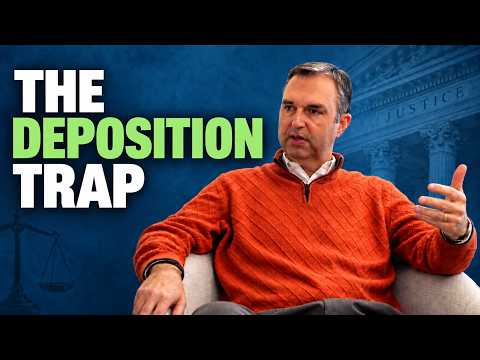
Getting injured at work is stressful enough and navigating workers’ comp on top of that can feel overwhelming. In this episode of The Verdict, lead workers’ comp attorney Brian Groesser joins Clarke to walk through the very first steps you should take after a workplace injury.
From seeking immediate medical attention to documenting the incident while memories are fresh, Brian explains why timing matters. He also shares why calling an attorney early doesn’t cost you anything but can save you from major missteps later. We’ll use analogies from March Madness and even oil changes to highlight how having an experienced “coach” in your corner levels the playing field against insurance carriers who deal with these cases every day.
You’ll also learn why many workers’ comp cases end in settlements that require resignation, and how being unprepared or unrepresented can leave you with pennies on the dollar and no job.
Here’s what we discuss in this episode:
🏥 Health first – Get immediate medical treatment before worrying about paperwork. 📝 Report the incident quickly – Memories fade; document while details are fresh. 📞 Call an attorney early – Initial consultations cost nothing and set you on the right path. 🏀 Don’t play without a coach – Insurance carriers have experts; you need one too. ⚠️ Settlements often require resignation – Don’t accept pennies on the dollar without guidance.
0:00 – What should you do first after injury? 3:05 – Taking the right first steps 4:30 – Why attorneys are critical
Featured Keyword & Other Tags
Workers comp, attorney, treatment, settlement, first steps, incident report, insurance
Client Links
Learn more about how Speaks Law Firm can help you: https://www.speakslaw.com/
Schedule your FREE case review: https://www.speakslaw.com/attorneys/r-clarke-speaks/#contactFormTarget
Find us on YouTube: https://bit.ly/3R40YMP
TranscriptClick to read
Clark: I’m Clark Speaks, the catastrophic injury lawyer. Welcome to the verdict. Welcome to the verdict. I’m here with Brian Grosser. Brian is talking to me about workers compensation claims, uh, in North Carolina. Brian, let me ask you this, okay? Uh, someone is hurt on the job, right? It’s just happened. Uh, seems to me the first thing they need to do is make sure they’re safe, make sure that they’re out of harm’s way, and make sure they’re getting the medical attention that they need. What is the second? What are the. What is the second, third, fourth thing that they need to do?
Brian Grosser: Well, let me walk through it. Let’s just say that you got hurt at work. First thing you need to do is, as you said, make sure that you’re okay. Like, don’t worry about filling out paperwork. If you’re actively bleeding out of your army, you need to go to the er, like, immediately. Like, go to the er, like, get the treatment done. But if you got to fill that intake sheet out, it’s best to do it as soon or not the intake. But the, um, incident report. If you need to fill out an incident report, it. It’s best to do it as close to the time of the incident as you can, because that is when everybody’s memory is fresh and everybody remembers exactly what happened. In theory. Right? That’s kind of the idea. Um, get the treatment. And then my recommendation would be, you know, call us. You know, give us a call and say, hey, I got hurt. This is what happened. Because again, we are your advocate in the sense that this is a system you’re not probably familiar with. Right. The other side is whether the employee. This may be the employer’s first injury. Likely not. But this may be the employer’s first injury, but it ain’t the insurance carrier’s first injury. Right.
Clark: Let me ask you a quick question. You say get the treatment. Do you mean get the initial treatment or finish treating?
Brian Grosser: No, I mean get the initial treatment. Like, if you need to go to urgent care, go to urgent care. If you need to go to the er, go to the er. Like, get the initial treatment. Oftentimes that’s directed by the employer, too. They’ll say, hey, you need to go to this particular urgent care. You need to go to this particular hospital. Whatever it is, just get the treatment, whatever you’ve got to get the treatment. Get the treatment done first. Your health is the number one priority when you care about your health more than anything else. So get the treatment that you need to do, the initial treatment done. First. But after you get that initial treatment, that’s when things start coming into play. Like, what are your restrictions? Are you going to be able to come back to work? What is the referral? Who, you know, is this being referred out to the insurance carrier? Um, are they going to start, uh, addressing it? Who are you dealing with as an adjuster? It’s in that scenario that it makes the most sense to me to contact your attorney. And here’s why. It doesn’t cost you anything. Right? You are getting. There is no retainer fee when it comes to having an attorney. We are literally there at the beginning to help you through this process. Now, there’s an attorney fee on the back end of it once we get you through the workers compensation process. But when you first call us, we’re there as your guide to walk you step by step through. Through an unfamiliar process. Again, you were hurt on the job. You’re not familiar with workers comp. This is our job. Right. Workers comp is our job. Let us take over from that point and walk you through this unfamiliar process so that you can get the best result you possibly can out of a situation you didn’t ask for in the first place.
Clark: Is it true that sometimes. Or is it the case that sometimes people call and we help them through those early stages and we tell them, here’s what you do today, here’s how you can get through this process. Ultimately, we’re not going to be able to help you resolve this case, and you’re never going to owe us a dime for that initial advice or consultation. Is that right?
Brian Grosser: Yeah. I’d rather you take the right first steps on the right path, whether we.
Clark: Represent you or not.
Brian Grosser: Whether we represent you or not, then take the wrong first steps onto the wrong path, and now you’re five miles down the road on the wrong path. You know what I mean? If I can put you on the right path to start, maybe you’ll give me a call on mile two or three on your journey, but I’m, um, at least put you onto the right path as opposed to you being on the wrong path and you giving me a call at, uh, mile two or three on your journey. But you’re on the wrong path and.
Clark: There’S a lot to recover at that point.
Brian Grosser: It may not. Right. It may be a possibility that it’s difficult to get you off that path and get you back onto the right path. If I can get you onto the right path, which is, you know, this podcast is part of that. Right. You may listen and not Even ever call me. Right. But at least I put you on the right path. And if you are on the right path, my hope is that you will call me when you need me. Maybe you need me on that first step, but maybe you need me on mile three instead. You know, you’ve got this. You’re on the right path. Everything’s going smoothly now. You bring the attorney in at mile three whenever it is, we’re here to help.
Clark: And what we want people to be able to do is to make informed decisions so that they. So. So right now they’re at a huge disadvantage in terms of what they know and how the process works and their understanding of what’s going on. And we want them to have the information that they need so that they can make good decisions, so they’ll be on equal footing with the insurance company, with the insurance adjuster, with the people, uh, who are involved from the other side.
Brian Grosser: Uh, let’s use March Madness again as an example, since that’s what we’re in. It’s like you’re the star athlete without a coach, right? And you’re about to play the other team
00:05:00
Brian Grosser: that has athletes, but they’ve got a coach on the other side who’s going to probably win the game. The team with the coach. Right. There’s a reason a head coach exists, right? Is to shape the game, to move it along, to put players in the right position in order to use their skills to the best of their abilities. That’s what we are, you know, as, uh, an attorney, you’re a coach. You are putting your client, your, uh, player in the right position to succeed in the game. And I hate to refer to workers comp. As a game. I’m just using this as an analogy, but. But it’s like playing in a game without a coach and just hoping that you can just wing it on your own. And, you know, if this is your first ever basketball game, you’re probably not going to do well.
Clark: Or, you know, I mean, it looks like, uh, it’s like, to me, it’s like changing my oil, you know, could I do it? Yes. Could I do it efficiently? No. You know, could I could. Could I learn to do it? Maybe. You know, but would I be a dis. At a disadvantage compared to somebody who works on a pit crew who does it all day, every day, their whole lives? You know, uh, absolutely. I’m going to be that person is going to be able to do it much better than I. And here is in a situation where, you know, the downside is not that I have to go to Jiffy Lube. The downside is it might cost me and my family thousands and thousands of dollars.
Brian Grosser: Well, let’s keep in mind too, there are it might cost you the car. And ah, the reason I say that is a lot of workers compensation cases ultimately result in in a settlement. And this may surprise workers, but a lot of them result in a settlement that requires you to resign from your job. And so if you are in a position where you’re settling for pennies on the dollar and you have to resign from your job, you’re in a terrible spot compared to where you were when you first the m day before you got hurt. Right. And it’s all because you decided to go through the process on your own and kind of just trust the process and trust the people that are on the other side that are advocating for themselves and for their own best interest. The reason that they’re asking you to resign is not because the employer doesn’t like you. It’s again, because the insurance carrier views you as a liability and they don’t want to settle a case with somebody who then goes back to work the next day and remains a liability. That is why they often ask for a resignation.
Clark: Let’s talk about that more in the next episode. Thank you, Brian. Thanks for joining us. Don’t forget to subscribe and follow us to stay up to date with our weekly episodes. We’ll see you next time.
00:07:27
Contact Us, & We Will Guide You Through Your Next Steps!
Required Fields*
Your Information Is Safe With Us.
We respect your privacy. The information you provide will be used to answer your question or to schedule an appointment if requested.