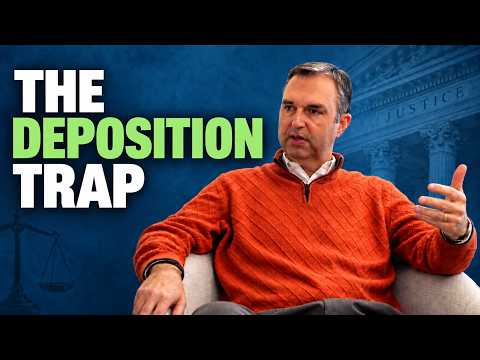
It’s easy to get frustrated with your workers’ comp claim? You’re not alone. Delays, restrictions, and tough assignments can make quitting feel like the only option—but it could be one of the costliest mistakes you make.
In this episode of The Verdict, Clarke Speaks and Brian Groesser explain why voluntarily quitting your job during an active workers’ compensation claim almost always hurts your case. They discuss how quitting cuts off your weekly benefits, removes your leverage in mediation, and can leave you with no income for months while waiting on a hearing.
Here’s what we discuss in this episode:
🚫 Don’t quit – Voluntarily quitting usually stops your weekly checks immediately. ⚖️ Leverage matters – Ongoing benefits give you bargaining power in mediation. ⏳ Litigation delays – Filing for benefits can take 9–12 months without income. 🕵️ Carrier tactics – Unpleasant work assignments may be designed to make you quit. 📞 Consult first – Always talk to an attorney before walking away from your job.
Featured Keyword & Other Tags
Workers comp, insurance, coverage, employment, benefits, income
Client Links
Learn more about how Speaks Law Firm can help you: https://www.speakslaw.com/
Schedule your FREE case review: https://www.speakslaw.com/attorneys/r-clarke-speaks/#contactFormTarget
Find us on YouTube: https://bit.ly/3R40YMP
TranscriptClick to read
Clarke: I’m, uh, Clark Speaks, the catastrophic injury lawyer. Welcome to the verdict. Welcome to the verdict. I’m here with Brian Grosser. I’m Clark Speaks. Brian, during the dependency of a workers compensation claim, sometimes people get frustrated. They can’t choose their own doctor. They get frustrated with delays. They get frustrated with lots of different things during the process. Sometimes they just want to quit and wash their hands of the whole thing. Is that a good idea? Should they quit?
Brian Groesser: Uh, in terms of the impact on your case, I would say no, that’s not a good idea. And here’s why. If you were to quit during the pendency of your claim and the employer was accommodating your restrictions, the insurance carrier is not going to start paying you because they are going to argue that you unjustifiably refused suitable employment, meaning that the employer was accommodating the restrictions. You chose to quit on your own. Like that was a voluntary decision on your end. That’s not going to trigger the insurance carrier paying you benefits at that point. And so what you jeopardize is the idea that you quit, and all of a sudden now you have no income unless you can find a job somewhere else. You got nothing coming in, you got nothing coming, and you’re injured, and you’re injured. So you got nothing coming from the employer and you got nothing coming from the insurance carrier. You got to go find a job somewhere else because they’re not just going to voluntarily pay you because you voluntarily quit.
Clarke: And what does that do to your claim?
Brian Groesser: Well, it depends. Uh, if you’re on restrictions, we can still make an argument that you are disabled. And by doing that, you’re going to have to start actively looking for work elsewhere. And we got to show that after a period of time, whatever that period of time may be likely going to have to be at least a couple months of looking for work that you haven’t been able to locate work because of your restrictions. We can still make that argument, but that takes time. And it’s not a situation where they necessarily are going to, um. Certainly the insurance carrier is not going to just voluntarily agree to start your benefits just because you haven’t found a job in three months. They’re going to make us file stuff in order to have the industrial commission tell us that you’re owed the money. And in order to do that, you could do something like file a Form 23. It’s a telephonic hearing, and the process takes about 30 days. But in my experience, under that type of a situation, they’re going to probably punt it to a full evidentiary hearing. And this is something that on all clients need to be cognizant of. And we talk about this before mediation is the time frame for litigation, right. If you’re not getting paid, litigation goes for nine to 12 months, right. Uh, you’re not going to get a decision until about a year later from the time that you file your hearing request. And so if you quit your job and you’re looking for work and you feel like you can’t find work because of your work restrictions, and the insurance carrier is not willing to start your benefits, and I file a hearing request today, if you don’t go back to work, you’re not going to get a decision until a year from now, likely. And that decision could go either way. But if it goes your way, you’ve just gone a year without receiving any type of benefits, any type of payment, nothing, because you haven’t gone back to work. It’s a big risk. It’s a big risk. And when you talk about the impact of your claim and the value in it, when you’re sitting there at mediation, we talked earlier in a different episode about leverage and weaknesses. One of the bigger leverage points that you have is if you’re receiving weekly checks, right? Because you are costing that carrier every week that this claim stays open. Right? It’s costing them. If they aren’t paying you any money and they know they’re not going to pay you any money for at least a year at best, they will wait you out because this is a weakness. Now you’re not receiving any money. You don’t have the leverage to. You have weakness because you’re not getting paid. The leverage is on their side. It’s going to impact your claim in a negative way as a result.
Clarke: So it sounds like to me that by quitting your job, you’re adding a layer of complexity. You’re delaying and reducing the. And you’re also reducing the value of your claim.
Brian Groesser: Absolutely.
Clarke: So one, uh, way to look at it in my experience is that during a workers compensation case, the flow of benefits, uh, and money to you from the insurance company based on your injuries and based on the medical care that you need and based on your lost wages, is what provides the leverage that you need in order to be able to settle your case. If you look at that as the flow of money or like the flow of water, they want to shut that valve off as quick as they can by reducing, you know, sending you back to work, shut off, saying you don’t need a surgery shut off, uh, you quitting shut off. So we’ve had situations where they have put people in positions, maybe, maybe they make them go to the night shift, maybe they make them try to, try to make them go to uh, you know, an area of uh. Like I had one scenario where they tried to put somebody who was a. Who would load trucks in the, uh, like the women’s clothing section in order for them at night so that they would be, you know, bored and uncomfortable and sort of maybe even humiliated a little bit in order to keep them, you know, try to, try to suggest to them in the hopes that they might, in the moment, they might quit. There are things we can do to address those, those kinds of tactics. But at the end of the day, it’s usually better in my experience, for the person to work through those challenges with their attorney rather than just be frustrated and walk out the front door.
Brian Groesser: That’s right. You could do a whole series of episodes on return to work scenarios in terms of coming to work, uh, during the middle of your claim, post mmi, pre. Mmi, with restrictions, without restrictions, what type of job you’re coming back to. Those types of things can take up multiple episodes. And we’ll do those, I imagine, in the future. But as it relates to your specific topic on this issue, where you’re already working and you just decide to quit doing that is almost inevitably going to be detrimental to your case in terms of the case value, because again, like I said earlier, you, by voluntarily quitting is not going to result in a voluntary payment from the carrier of TTD benefits. You’re going to have to go litigate that in order to get those benefits started.
Clarke: Sometimes there are more important things than money, right? You might have to do this for your mental health, you might have to do this for your physical health. But you need to consult with an attorney before your attorney before you make this decision because it can really negatively impact your claim. Uh, well, thank you, Brian. I appreciate you joining us. And next time we’ll talk about some additional issues that come up in workers compensation claims. Thank you for joining us. We’ll see you next time. Thanks for joining us. Don’t forget to subscribe and follow us to stay up to date with our weekly episodes. We’ll see you next time.
Contact Us, & We Will Guide You Through Your Next Steps!
Required Fields*
Your Information Is Safe With Us.
We respect your privacy. The information you provide will be used to answer your question or to schedule an appointment if requested.